 Trending
How Does Compaction Actually Work?
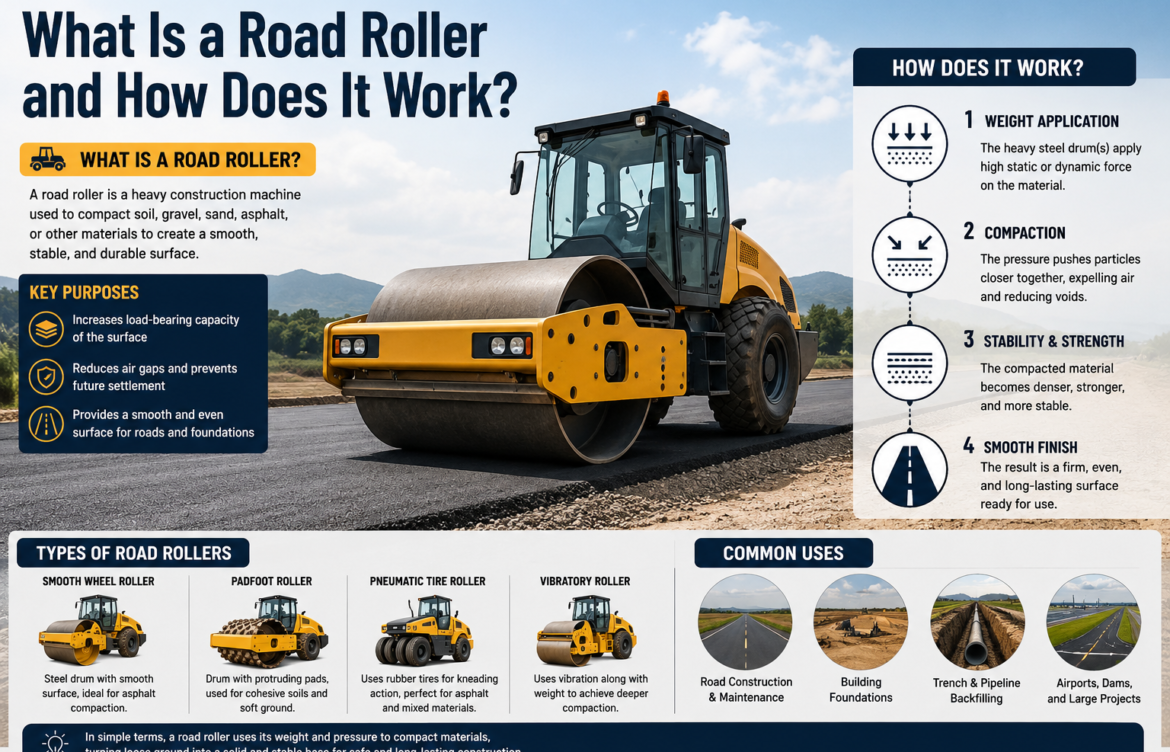
What Is a Road Roller and How Does It Work?
Every road you drive on, every parking lot you cross, and every building foundation that holds firm shares one thing in common: compacted ground beneath the surface. That compaction does not happen by accident. It happens because a road roller pressed the material into a dense, stable layer that can carry weight without shifting, cracking, or sinking.
If you have ever wondered what these machines actually do — or how the right roller turns loose soil and hot asphalt into surfaces that last for decades — this guide is for you. Whether you are a contractor sizing up your next equipment purchase, a student learning the trade, or simply curious about the machines that build our roads, you will come away with a clear understanding of how road rollers work and why they matter.
Here’s what’s inside:
- What a road roller is and the job it does on a construction site
- The main types of rollers and what each one handles best
- How vibratory and static compaction actually work
- The key components that make a roller perform
- Why proper compaction is the foundation of durable surfaces
What Is a Road Roller?
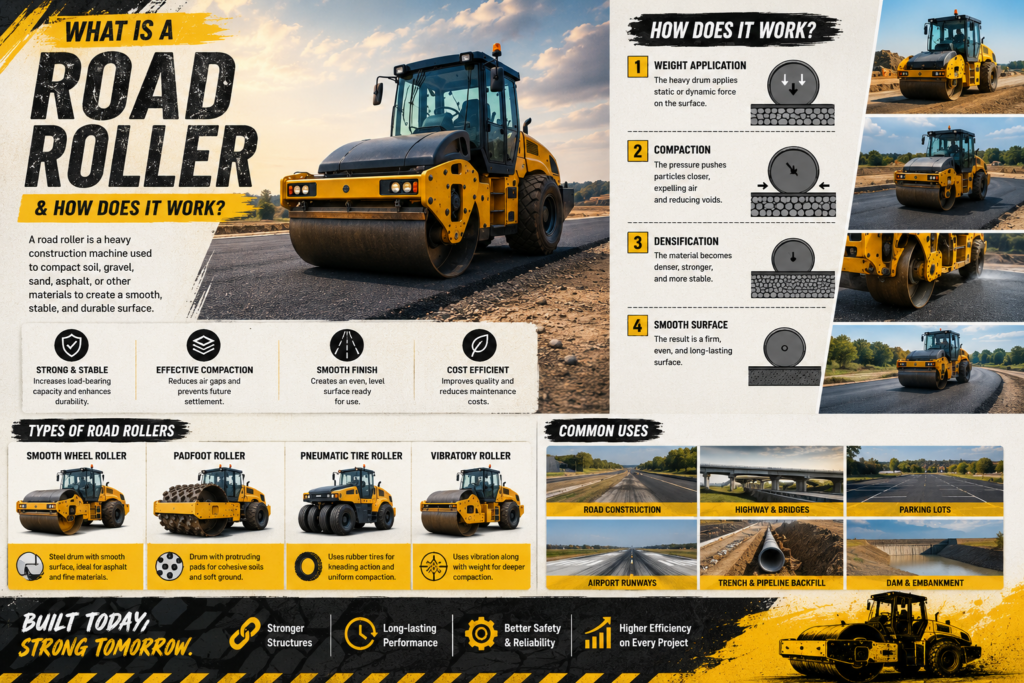
A road roller is a heavy compaction machine that uses one or more steel drums — or rows of rubber tires — to press loose material into a dense, stable surface.
You’ll also hear them called rollers, compactors, or steamrollers, a nod to the steam-powered machines that pioneered the category. Modern rollers run on diesel engines and deliver far more precise, controllable compaction than their ancestors ever could.
The core job is simple to describe and critical to get right: remove the air and voids from a material so its particles lock tightly together. Loose soil, gravel, or asphalt is full of gaps. Left uncompacted, that material settles unevenly, traps water, and fails under load. A road roller squeezes those gaps out, creating a surface strong enough to carry traffic, structures, and time.
In short: a road roller transforms loose, unstable material into a firm foundation that holds its shape and bears weight.
What Does a Road Roller Do in Construction and Paving?
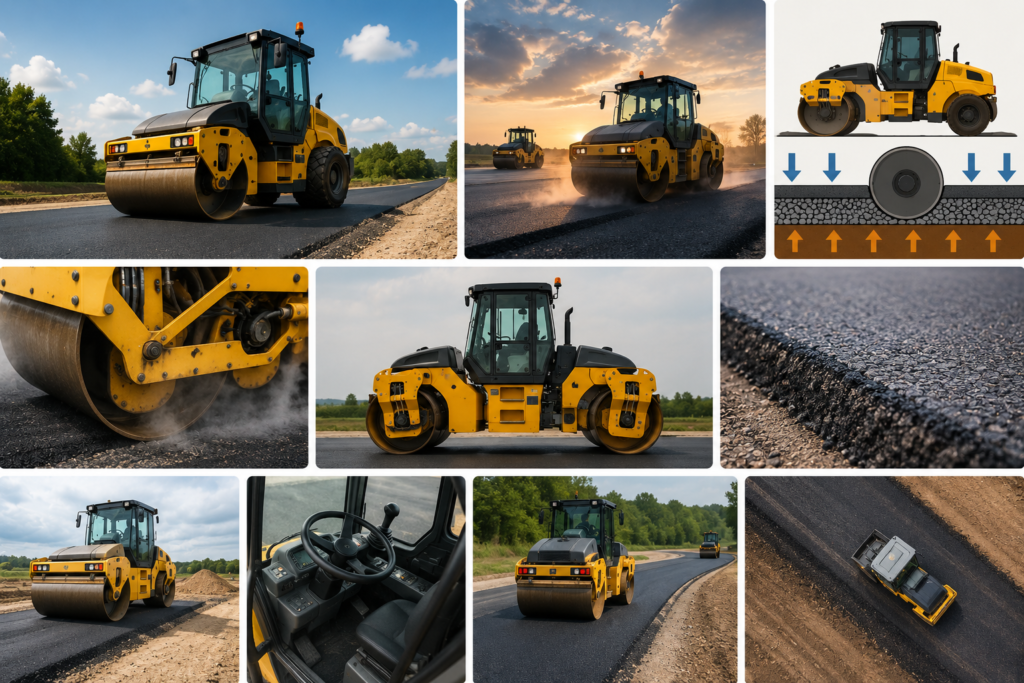
Compaction is one of the most important steps in any construction or paving project, and the road roller is the machine built to do it. Its work falls into two broad categories.
Soil and Subbase Compaction
Before any road or structure goes up, the ground underneath must be prepared. Rollers compact soil, granular fill, and aggregate base layers to create a stable platform. This step prevents future settling, improves load-bearing capacity, and protects everything built on top.
Asphalt Compaction
Once hot asphalt is laid down, it must be compacted quickly while still warm. Rollers press the asphalt mat to the correct density, producing a smooth, sealed surface that resists water, cracking, and rutting. Proper asphalt compaction is the difference between a road that lasts 20 years and one that fails in five.
The bottom line: without compaction, surfaces fail early. The road roller is what makes long-lasting roads, lots, and foundations possible.
The Main Types of Road Rollers
Not all rollers are built for the same job. The three primary types are engineered for different stages of compaction work. Choosing the right one is the foundation of good results.
Single Drum Rollers
A single drum roller combines one large steel drum at the front with pneumatic drive tires at the rear.
The steel drum delivers concentrated compaction force, while the rubber tires provide traction across rough, uneven ground. This makes single drum rollers the workhorse of soil and granular compaction.
They handle:
- Subbase and base course compaction
- Granular fill and aggregate
- Roadbed and building pad preparation
- Site development and earthwork
Single drums come in smooth or padfoot (sheepsfoot) configurations. Smooth drums suit granular and mixed soils, while padfoot drums work cohesive clay by kneading the material for deeper compaction.
Double Drum (Tandem) Rollers
A double drum roller — also called a tandem roller — uses two steel drums, one front and one rear.
Because it compacts with steel on every pass, the tandem roller produces the smooth, even finish that asphalt demands. This is the standard machine for paving work of all kinds.
It handles:
- Asphalt paving on roads and highways
- Parking lots and commercial surfaces
- Driveways and residential paving
- Patch and overlay work
Pneumatic Tire Rollers
A pneumatic tire roller (PTR) uses several rows of rubber tires instead of steel drums.
The overlapping tires apply a kneading action that seals and densifies asphalt surfaces, closing voids the steel drums leave behind. PTRs often serve as the intermediate machine in a paving train, working between the breakdown and finish passes to improve final density.
Quick takeaway: single drums build the base, double drums finish asphalt, and pneumatic tire rollers seal and densify the surface.
How Does Compaction Actually Work?
A road roller transfers force into the material in one of two ways. Understanding the difference helps explain why the right setting matters so much.
Static Compaction
Static compaction relies purely on the machine’s own weight to compress material.
The roller simply rolls over the surface, and gravity does the work. It’s gentle and controlled, which makes it ideal for finish passes on asphalt — where too much force could mark the surface or crush aggregate.
Vibratory Compaction
Vibratory compaction adds a rotating eccentric weight inside the drum that creates rapid, powerful impacts.
This vibration dramatically increases compaction force without adding machine weight. The result: the roller densifies deeper lifts faster and more effectively. Most modern soil and asphalt rollers offer vibratory operation, and operators can switch it off when needed — for finish passes, work on bridges, or jobs near sensitive structures.
Two settings control how vibration transfers energy:
- Amplitude — the height of the drum’s movement. High amplitude drives deep compaction in thick lifts; low amplitude suits thin asphalt and finish work.
- Frequency — how many vibrations occur per minute. The right frequency-amplitude balance produces a smooth surface without over-compacting.
Reader checkpoint: if you need to densify a deep layer of soil, vibratory compaction at high amplitude gets the job done. If you’re finishing a thin asphalt mat, you’ll want static or low-amplitude passes to protect the surface.
Key Components of a Road Roller
A road roller is more than an engine and a drum. Several components work together to deliver clean, consistent compaction.
Drums
The drum is the heart of the machine. Smooth steel drums handle granular soils and asphalt finishing, while padfoot drums use protruding feet to grip and knead cohesive clay. Drum width determines how much area the roller covers per pass — wider drums boost productivity on open jobs, while narrower drums maneuver better in tight spaces.
Scrapers
Drum scrapers are simple but essential. Mounted against the drum, they remove material that sticks to the steel surface during operation. Clean drums produce clean compaction; clogged drums leave marks and uneven results. Well-maintained scrapers keep the roller working at its best.
Water Spray Systems
On asphalt rollers, a water spray system keeps the drums wet throughout the pass.
This matters more than it might seem. Hot asphalt sticks to dry steel, tearing the surface and ruining the finish. A steady spray of water prevents sticking, so the drum glides cleanly over the mat. Spray nozzles and filters need regular cleaning — clogged nozzles are a common cause of surface defects.
Engine and Drive System
The diesel engine powers both travel and vibration. A capable engine maintains consistent speed and compaction force under load, climbs grades without straining, and sustains output across a full shift. The drive system delivers power to the drum and tires, keeping the machine moving steadily for even, overlapping passes.
Mini-summary: drums apply the force, scrapers keep them clean, water spray protects asphalt, and the engine drives it all.
Why Road Rollers Are Essential for Durable Surfaces
Compaction is invisible once a project is finished — but its effects last for decades. Here’s why the road roller earns its place on nearly every site.
Proper compaction does several critical things:
- Increases load-bearing strength so the surface carries traffic and structures without failing
- Prevents settling and shifting that crack pavement and weaken foundations
- Seals out water, which is the leading cause of premature surface failure
- Extends service life, reducing repairs, callbacks, and long-term maintenance costs
Skip or shortcut compaction, and the consequences show up fast: potholes, rutting, cracking, and uneven settling. Do it right, and the surface performs reliably year after year. That reliability is exactly why contractors treat compaction — and the roller that delivers it — as a foundational part of quality work.
From Loose Material to Lasting Results
A road roller does one job, and it does it with purpose: it turns loose, unstable material into a dense, durable surface that stands up to weight, weather, and time. Single drum rollers prepare the soil and subbase. Double drum tandems finish asphalt to a smooth, sealed surface. Pneumatic tire rollers densify and seal the final mat. And whether through static weight or vibratory force, every pass works toward the same goal — strength that lasts.
Understanding how these machines work gives you a real advantage, whether you’re learning the trade, evaluating equipment, or simply appreciating the engineering behind every road you travel. The next time you drive across a smooth highway or a solid parking lot, you’ll know exactly what made it possible — and why the road roller remains one of the most essential machines in construction.
Why Road Rollers Are Essential for Durable Surfaces
Compaction is invisible once a project is finished — but its effects last for decades. Here is why proper compaction is essential:
- Increases load-bearing strength so the surface carries traffic and structures without failing.
- Prevents settling and shifting that crack pavement and weaken foundations.
- Seals out water, which is a leading cause of premature surface failure according to civil engineering standards.
- Extends service life, reducing repairs, callbacks, and long-term maintenance costs.
Skip or shortcut compaction, and the consequences show up fast: potholes, rutting, cracking, and uneven settling. (If you are noticing these issues on your property, read our troubleshooting guide to pavement failures).
From Loose Material to Lasting Results
A road roller does one job, and it does it with purpose: it turns loose, unstable material into a dense, durable surface that stands up to weight, weather, and time. Single drum rollers prepare the soil and subbase. Double drum tandems finish asphalt to a smooth, sealed surface. Pneumatic tire rollers densify the final mat.
Understanding how these machines work gives you a real advantage. The next time you drive across a smooth highway or a solid parking lot, you will know exactly what made it possible — and why the road roller remains one of the most essential machines in construction.
Key Components of a Road Roller
A road roller is more than an engine and a drum. Several components work together to deliver clean, consistent compaction:
- Drums: The heart of the machine. Smooth steel drums handle granular soils and asphalt, while padfoot drums use protruding feet to grip and knead cohesive clay.
- Scrapers: Mounted against the drum, they remove material that sticks to the steel surface during operation to prevent marks and uneven results.
- Water Spray Systems: On asphalt rollers, a steady spray of water prevents hot asphalt from sticking to the dry steel, ensuring the drum glides cleanly over the mat.
- Engine and Drive System: The diesel engine powers both travel and vibration, sustaining consistent speed and compaction force across full shifts.