 Trending
The Road Rollers
How Road Rollers Help Reduce Construction Time
Every day a construction project extends beyond its deadline, your profitability drops. Site supervisors and contractors know that material preparation often dictates the pace of the entire job. If your compaction process lags, the paving train stops, labor costs skyrocket, and weather delays threaten to derail your schedule.
By the end of this guide, you will understand exactly how road rollers accelerate project timelines, eliminate costly rework, and deliver consistent surface quality. We will explore how these highly engineered machines maximize compaction efficiency and drive productivity across various job sites. By leveraging the right equipment, you protect your operating margins and ensure your crew moves confidently to the next highly profitable phase of construction.
Achieving Maximum Compaction Efficiency
Time is your most valuable asset on a job site. Road rollers utilize immense weight and advanced vibratory systems to consolidate materials rapidly. This raw power translates directly to fewer passes required to achieve target density, drastically shrinking your operational timeline.
Faster Soil and Sub-Base Preparation
Before you can lay a single inch of asphalt or concrete, you must establish a rock-solid sub-base. If the foundational dirt and crushed stone remain loose, the entire project will stall. Vibratory soil rollers force air and moisture out of these base materials quickly.
Using a padfoot roller on heavy clay or a smooth drum roller on granular soil ensures the ground reaches maximum load-bearing capacity rapidly. When your foundation is prepped efficiently, you avoid weather-related mud delays and allow the rest of your heavy equipment fleet to begin the final building phase sooner.
Rapid Asphalt Paving Cycles
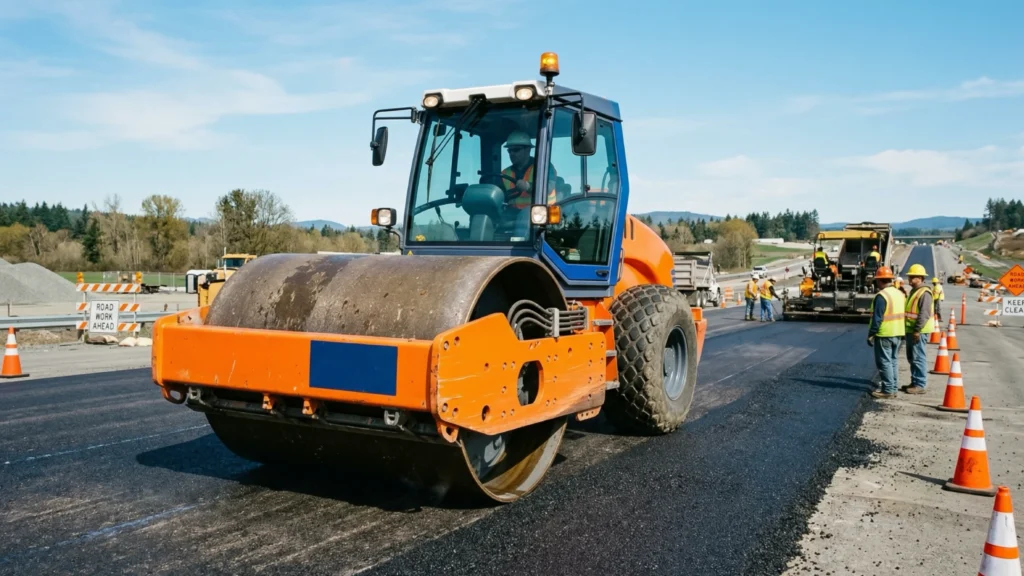
Hot mix asphalt presents a very strict temperature window for proper compaction. If the material cools before reaching target density, it becomes impossible to compress, leading to structural failure.
Tandem vibratory rollers allow operators to hit maximum density rapidly while the asphalt remains in its ideal temperature zone. Securing this tight paving window prevents material waste and keeps the entire paving crew moving forward without interruption. You finish the stretch of road faster and move the paving train to the next sector without waiting.
Eliminating Costly Rework and Delays
Nothing destroys a project schedule faster than failing a density test. Inadequate compaction forces crews to rip up the finished surface, haul away the failed materials, and start the process entirely over.
The Impact of Intelligent Compaction
Modern road rollers utilize intelligent compaction technology to prevent these catastrophic delays. Onboard measurement systems provide your operators with real-time density feedback directly inside the cab.
This technology completely eliminates the guesswork from the paving process. When your operators know exactly when they achieve target density, they stop rolling. This prevents both under-compaction (which causes immediate structural weakness) and over-compaction (which shatters the aggregate and ruins the surface).
Passing Inspections the First Time
When your crew works with precision, you pass municipal and state density inspections on the first attempt every single time. Avoiding re-testing saves days of idle downtime. You can transition smoothly to line striping, final grading, and ultimately, project handover.
Matching the Roller to the Material for Faster Results
Using the wrong machine for your specific material wastes hours of productive time. You accelerate your construction schedule by deploying specialized rollers designed for exact job site conditions.
- Pneumatic Tire Rollers: These machines feature staggered rubber tires that knead the asphalt surface. They seal the aggregate tightly and prevent water intrusion. Using a pneumatic roller delivers a uniform finish quickly, allowing you to open the roadway to public traffic much sooner.
- Combination Rollers: By pairing a steel vibrating front drum with smooth rubber rear tires, combination rollers provide dual-action compaction. This versatility allows smaller crews to handle both breakdown and finish rolling with a single machine, speeding up small to medium paving jobs.
- Trench Rollers: Compacting deep utility trenches manually takes days. Remote-controlled trench rollers allow you to compact backfill in thick lifts rapidly, ensuring the trench is stable and ready for surface paving in a fraction of the time.
Practical Examples of Time Savings on the Job
Different projects require entirely different compaction strategies. Deploying the right road roller minimizes downtime across a wide variety of construction environments.
Highway Construction and Infrastructure
On massive highway projects, scale and speed dictate success. Heavy double-drum rollers cover extremely wide swaths of asphalt in single passes. This rapid, high-volume coverage ensures the asphalt paver never has to slow down. Contractors relying on high-capacity rollers routinely complete miles of roadway shifts ahead of their projected schedules.
Commercial Parking Lots
Commercial paving requires navigating around concrete light poles, landscaped islands, and sharp curbs. Using highly maneuverable compact rollers provides the heavy compaction needed for heavy traffic zones while allowing operators to finish tight corners quickly. The agility of the machine accelerates the overall completion of the lot, allowing the retail or commercial client to open their business faster.
Residential Paving Projects
Driveways and local neighborhood roads benefit heavily from agile mini road rollers. These machines mobilize quickly on small trailers. They provide enough force to compact the driveway densely without damaging the homeowner’s surrounding property or delicate hardscaping. Because they work fast and transport easily, your crew can complete multiple residential paving jobs in a single workday.
Maximize Your Job Site Profitability
Your equipment choices directly dictate your project speed, operational consistency, and long-term results. Road rollers do far more than just flatten dirt and asphalt; they serve as the catalyst for your entire construction timeline. By maximizing compaction efficiency, preventing costly rework, and delivering superior surface quality, these machines ensure you finish jobs faster and more profitably.
We know that reliable equipment is the foundation of your success. Review your upcoming project schedules and evaluate your current compaction fleet. If your machines are slowing you down, it is time to upgrade. Assess your exact project requirements today, and invest in the high-performance road roller that will keep your crews moving efficiently toward the next successful handover.
How Road Rollers Help Reduce Construction Time
Every day a construction project extends beyond its deadline, your profitability drops. Site supervisors and contractors know that material preparation often dictates the pace of the entire job. If your compaction process lags, the paving train stops, labor costs skyrocket, and weather delays threaten to derail your schedule.
This is exactly where high-performance road rollers step in. By the end of this guide, you will understand exactly how road rollers accelerate project timelines, eliminate costly rework, and deliver consistent surface quality. We will explore how these highly engineered machines maximize compaction efficiency and drive productivity across various job sites. By leveraging the right equipment, you protect your operating margins and ensure your crew moves confidently to the next highly profitable phase of construction.
Achieving Maximum Compaction Efficiency with Road Rollers
Time is your most valuable asset on a job site. Road rollers utilize immense weight and advanced vibratory systems to consolidate materials rapidly. This raw power translates directly to fewer passes required to achieve target density, drastically shrinking your operational timeline.
Faster Soil and Sub-Base Preparation
Before you can lay a single inch of asphalt or concrete, you must establish a rock-solid sub-base. If the foundational dirt and crushed stone remain loose, the entire project will stall. Vibratory road rollers force air and moisture out of these base materials quickly.
Using a padfoot roller on heavy clay or a smooth drum roller on granular soil ensures the ground reaches maximum load-bearing capacity rapidly. When your foundation is prepped efficiently, you avoid weather-related mud delays and allow the rest of your heavy equipment fleet to begin the final building phase sooner.
Rapid Asphalt Paving Cycles
Hot mix asphalt presents a very strict temperature window for proper compaction. If the material cools before reaching target density, it becomes impossible to compress, leading to structural failure.
Tandem vibratory road rollers allow operators to hit maximum density rapidly while the asphalt remains in its ideal temperature zone. Securing this tight paving window prevents material waste and keeps the entire paving crew moving forward without interruption. You finish the stretch of road faster and move the paving train to the next sector without waiting.
How Modern Road Rollers Eliminate Costly Rework and Delays
Nothing destroys a project schedule faster than failing a density test. Inadequate compaction forces crews to rip up the finished surface, haul away the failed materials, and start the process entirely over.
The Impact of Intelligent Compaction
Modern road rollers utilize intelligent compaction technology to prevent these catastrophic delays. Onboard measurement systems provide your operators with real-time density feedback directly inside the cab, a standard rapidly being adopted and promoted by the Federal Highway Administration (FHWA).
This technology completely eliminates the guesswork from the paving process. When your operators know exactly when they achieve target density, they stop rolling. This prevents both under-compaction (which causes immediate structural weakness) and over-compaction (which shatters the aggregate and ruins the surface).
Passing Inspections the First Time
When your crew works with precision, you pass municipal and state density inspections on the first attempt every single time. Avoiding re-testing saves days of idle downtime. You can transition smoothly to line striping, final grading, and ultimately, project handover.
Matching Road Rollers to the Material for Faster Results
Using the wrong machine for your specific material wastes hours of productive time. You accelerate your construction schedule by deploying specialized road rollers designed for exact job site conditions.
| Type of Road Roller | Key Mechanism | How it Reduces Construction Time |
| Pneumatic Tire Rollers | Staggered rubber tires | Kneads and seals the asphalt tightly to prevent water intrusion, allowing you to open the roadway to public traffic much sooner. |
| Combination Rollers | Steel front drum & rubber rear tires | Provides dual-action compaction. Small crews can handle both breakdown and finish rolling with a single machine, speeding up paving jobs. |
| Trench Rollers | Remote-controlled padfoot drums | Compacts backfill in thick lifts rapidly, ensuring deep utility trenches are stable and ready for surface paving in a fraction of the manual time. |
For a deeper dive into selecting the perfect machine for your sub-base, review our internal Heavy Compaction Equipment Guide.
Practical Examples of Road Rollers Saving Time on the Job
Different projects require entirely different compaction strategies. Deploying the right road rollers minimizes downtime across a wide variety of construction environments.
Highway Construction and Infrastructure
On massive highway projects, scale and speed dictate success. Heavy double-drum road rollers cover extremely wide swaths of asphalt in single passes. This rapid, high-volume coverage ensures the asphalt paver never has to slow down. Contractors relying on high-capacity rollers routinely complete miles of roadway shifts ahead of their projected schedules.
Commercial Parking Lots
Commercial paving requires navigating around concrete light poles, landscaped islands, and sharp curbs. Using highly maneuverable, compact road rollers provides the heavy compaction needed for heavy traffic zones while allowing operators to finish tight corners quickly. The agility of the machine accelerates the overall completion of the lot, allowing the retail or commercial client to open their business faster.
Residential Paving Projects
Driveways and local neighborhood roads benefit heavily from agile mini road rollers. These machines mobilize quickly on small trailers. They provide enough force to compact the driveway densely without damaging the homeowner’s surrounding property or delicate hardscaping. Because they work fast and transport easily, your crew can complete multiple residential paving jobs in a single workday.
Maximize Your Job Site Profitability
Your equipment choices directly dictate your project speed, operational consistency, and long-term results. Road rollers do far more than just flatten dirt and asphalt; they serve as the catalyst for your entire construction timeline. By maximizing compaction efficiency, preventing costly rework, and delivering superior surface quality, these machines ensure you finish jobs faster and more profitably.
We know that reliable equipment is the foundation of your success, a principle echoed by industry leaders like the National Asphalt Pavement Association (NAPA). Review your upcoming project schedules and evaluate your current compaction fleet. If your machines are slowing you down, it is time to upgrade. Assess your exact project requirements today, and explore our Current Road Roller Inventory to invest in the high-performance equipment that will keep your crews moving efficiently toward the next successful handover.