 Trending
Road rollers in sustainable construction
How Road Rollers Support Sustainable Road Construction
1. Proper Compaction Cuts Long-Term Waste with Road Rollers in Sustainable Construction
Road rollers in sustainable construction prevent the silent failures that occur when a poorly compacted road looks perfectly fine the day it opens, only for cracks to spider across the surface after the first hard winter. When water seeps into loose layers, premature degradation forces crews back out to tear up fresh pavement—burning fuel, hauling new material, and disrupting traffic all over again. Every single one of those repeat repairs carries a heavy environmental cost, and most of them trace back to a single step done poorly at the start: compaction.
A poorly compacted road looks fine the day it opens. Then the first hard winter hits, water seeps into the loose layers, and cracks spider across the surface within a year. Now crews are back out tearing up fresh pavement, burning fuel, hauling new material, and disrupting traffic all over again. Every one of those repairs carries a real environmental cost, and most of them trace back to one step done poorly at the start: compaction.
Road rollers sit at the center of building roads that last, and roads that last are roads that waste less. The right machine, used well, packs material tight enough to shrug off water, weight, and weather for decades instead of seasons. Along the way, modern rollers help crews reuse old asphalt, burn less fuel, and finish work faster with far less impact on the surrounding site.
Better compaction also means making more efficient use of construction materials. When each layer reaches the required density the first time, projects require fewer repairs, less replacement aggregate and asphalt, and fewer repeat construction cycles over the road’s lifespan. That translates into lower material consumption, reduced emissions from equipment and transportation, and infrastructure that delivers greater value with a smaller environmental footprint.
Proper Compaction Cuts Long-Term Waste and Repairs
Heavy duty road rollers in sustainable construction compacting highway base layers
By working with a trusted equipment specialist to select the best machinery for your applications, you can improve overall compaction efficiency. To learn how to maintain your fleet assets for maximum efficiency, view our internal guide on how to care for compact construction equipment.
Compaction is where a road’s lifespan is decided. Pack the material to the right density and it resists water, traffic, and freeze-thaw cycles for years. Fall short, and the surface fails early, forcing repairs that consume fresh material, fuel, and labor all over again. Getting it right the first time is one of the greenest choices on the whole project.
Well-compacted roads also require less ongoing maintenance throughout their service life. With fewer potholes, rutting, and structural failures to repair, agencies and contractors can reduce the demand for additional construction materials, equipment operation, and traffic disruptions. The result is infrastructure that delivers better long-term performance while lowering both maintenance costs and environmental impact.
Density Now Means Fewer Repairs Later
Air voids are the enemy of a durable road. When compaction leaves too many gaps, water works its way in, weakens the base, and triggers cracking, rutting, and potholes. Each of those defects shortens the road’s life and pulls crews back for repairs that never should have been needed.
A properly compacted road reaches the target density that seals out water and spreads load evenly. That means fewer callbacks, longer intervals between resurfacing, and far less material sent to landfill from premature tear-outs.
One Good Pass Beats Three Repairs
Every repair project requires additional materials, fuel, and labor, making proper compaction an important part of reducing waste. Achieving the target density, compacting each lift evenly, avoiding over-rolling, and verifying density with testing all help create a longer-lasting surface. Getting compaction right the first time reduces future repairs while conserving resources and lowering overall project costs.
Rollers Unlock Recycled and Reclaimed Materials
Reusing old pavement is one of the biggest sustainability wins in road building, and rollers make it possible. Recycled asphalt and reclaimed base materials behave differently under compaction, and a capable roller is what turns yesterday’s road into a solid new one instead of a pile of waste headed for the dump.
Modern road rollers deliver the consistent compaction needed to maximize the performance of recycled asphalt and reclaimed construction materials. By achieving the required density, they help contractors reduce reliance on new raw materials, minimize waste sent to landfills, and lower the environmental impact of road construction while maintaining durable, long-lasting pavement.
Compacting Recycled Asphalt the Right Way
Reclaimed asphalt pavement, milled from old roads, can replace a large share of virgin material in a new mix. But it only performs if it’s compacted to full density. Rollers apply the weight and vibration needed to bond recycled material into a durable, water-tight surface that rivals all-new asphalt.
That reuse keeps huge volumes of material out of landfills and cuts the demand for freshly mined aggregate and new binder. The road gets built, the old pavement gets a second life, and the environmental math improves on both ends.
Building on Reclaimed and Stabilized Bases
Sustainability also begins below the surface, where recycled and reclaimed materials reduce the need for new resources. Road rollers compact reclaimed asphalt pavement (RAP), full-depth reclamation layers, stabilized subgrades, and recycled aggregate bases into strong, durable foundations. Proper compaction ensures these materials perform reliably, helping extend pavement life while reducing waste and conserving natural resources.
Modern Roller Technology Shrinks Environmental Impact
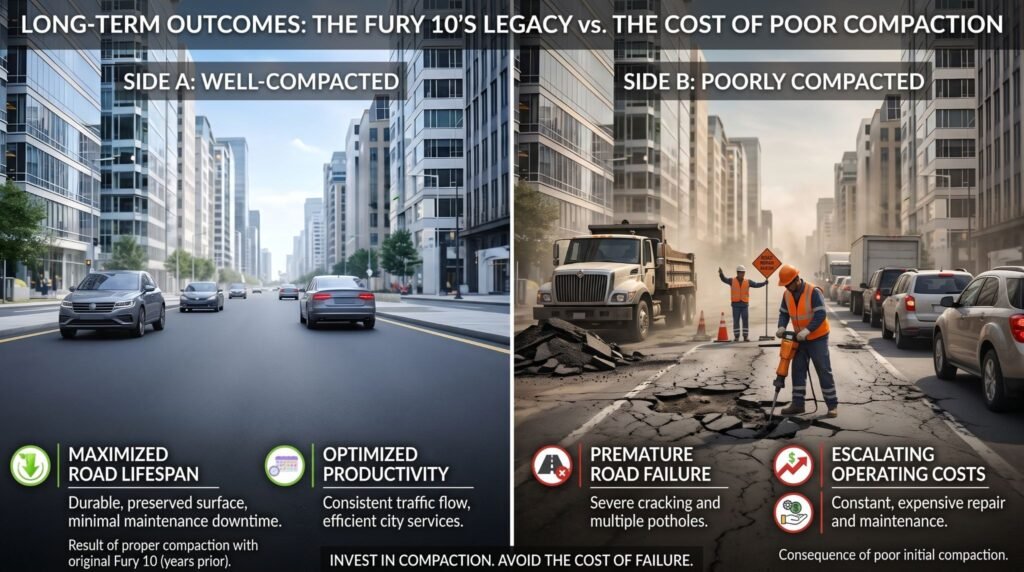
Today’s rollers do far more than press down material. Smart controls, positioning technology, and cleaner engines let crews compact more precisely, waste less fuel, and avoid the rework that drains resources. These features turn a roller into a tool for building efficiently as well as durably.
Advanced features such as intelligent compaction monitoring, adjustable vibration settings, and fuel-efficient power systems help operators achieve target density with fewer passes. This reduces fuel consumption, lowers equipment emissions, minimizes unnecessary machine wear, and improves overall jobsite efficiency while maintaining consistent compaction quality.
Cleaner Engines and Smarter Power
Roller manufacturers have made real strides in reducing emissions and fuel use, directly lowering the environmental cost of every project.
- Low-emission diesel engines meeting modern standards for cleaner exhaust.
- Fuel-efficient and eco power modes that match engine output to the load.
- Electric and hybrid models cutting emissions and noise on suitable sites.
- Automatic idle and shutoff to stop fuel waste when the machine sits.
The Right Roller Type and Size Keeps Sites Efficient
Matching the machine to the job is a sustainability decision in its own right. An oversized roller burns extra fuel and can damage delicate work, while an undersized one takes too many passes and slows the whole project. The right fit compacts efficiently, protects the surrounding site, and gets crews off the job faster.
Selecting the appropriate roller based on material type, project size, and required compaction depth helps maximize productivity while minimizing resource use. A properly sized machine completes the work with fewer passes, reduces unnecessary fuel consumption, and limits wear on both the equipment and the finished surface, resulting in a more efficient and environmentally responsible construction process.
Match the Machine to the Material and Space
Different jobs call for different rollers, and choosing well keeps energy and effort focused where they count. Understanding the types of road rollers helps you choose the right machine for each application:
- Single drum rollers for deep soil, base, and subgrade compaction.
- Double drum rollers for smooth, efficient asphalt finishing.
- Pneumatic rollers for sealing surfaces and kneading mixed materials.
- Compact and walk-behind rollers for tight urban work and small repairs.
Matching drum width and weight to your lift thickness means full density with fewer passes, which saves fuel and time on every stretch of road.
Smaller Footprint, Less Disruption
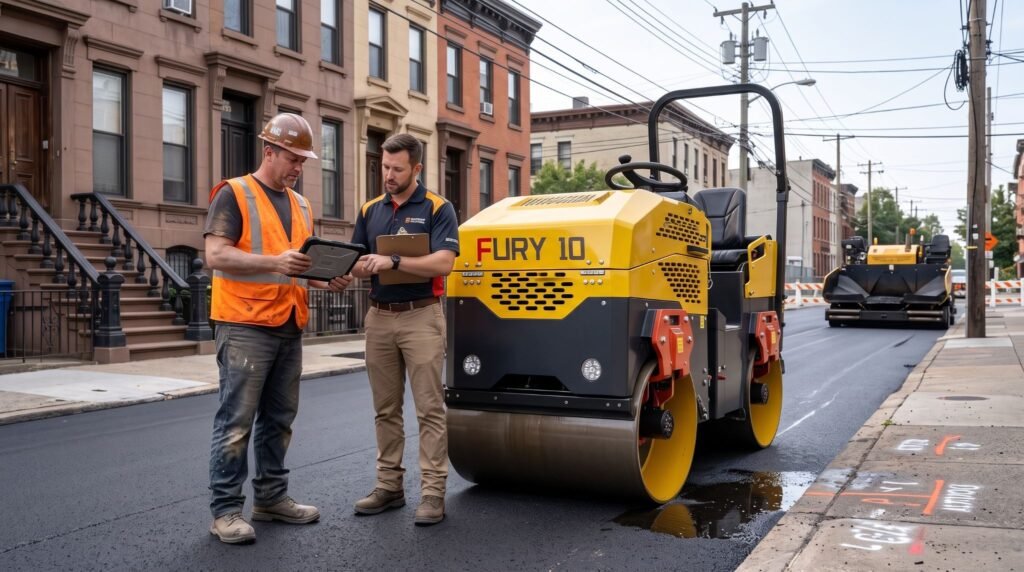
Choosing the right-sized road roller improves more than compaction quality. A properly matched machine reaches target density with fewer passes, works effectively in confined areas around utilities and edges, and helps minimize noise, vibration, and traffic disruption. Completing the job faster also reduces fuel use and shortens lane closures, making the project more efficient for both crews and the surrounding community.
Conclusion
Road rollers do far more than flatten fresh pavement. They decide how long a road lasts, and a road that lasts is a road that spares the material, fuel, and disruption of constant repairs. Proper compaction seals out early failure, capable rollers turn old pavement into durable new surfaces, modern technology trims fuel and emissions, and the right machine size keeps every site efficient and clean.
Sustainable road construction begins with choosing equipment that delivers consistent, high-quality compaction from the start. The right road roller not only helps create longer-lasting pavement but also reduces unnecessary material use, fuel consumption, and future maintenance throughout the life of the project. By working with a trusted equipment specialist to select the best roller for your applications, you can improve construction efficiency while supporting more durable, cost-effective, and environmentally responsible infrastructure.
Frequently Asked Questions
Are electric or hybrid road rollers practical for real projects?
Increasingly, yes. Electric and hybrid rollers have matured to handle many compaction tasks, especially compact models used for urban streets, repairs, and confined sites. They produce zero or reduced tailpipe emissions and run far quieter, which makes them ideal for night work, tunnels, and noise-sensitive neighborhoods. For large highway projects, diesel still dominates, but cleaner engines and eco power modes keep narrowing the gap, and adoption grows each year.
How does intelligent compaction reduce material and fuel waste?
Intelligent compaction measures material density in real time and displays it to the operator, so the crew knows exactly when a section has reached target density. That prevents wasted passes over ground that’s already compacted, which saves fuel, and it prevents under-compacted spots that would fail early and demand repairs. By guiding the operator to uniform coverage in the fewest necessary passes, the technology trims both fuel burn and the material waste tied to rework.
Does sustainable road construction cost more upfront?
Some sustainable practices carry a modest upfront cost, such as advanced roller technology or added mix engineering, but they typically pay back over the road’s life. Recycled materials often cost less than virgin ones, fuel-efficient machines lower operating expenses, and durable compaction slashes long-term repair spending. When you account for the full lifecycle rather than just day-one costs, building sustainably usually proves the more economical choice as well as the greener one.
How many passes does a road roller need for proper compaction?
The number of passes depends on the material being compacted, the lift thickness, moisture content, and the roller’s weight and vibration settings. Rather than following a fixed number, operators should continue compacting until the required density is achieved and verify the results with field density testing when specifications require it.