 Trending
Track and Wheeled Scissor Lift Designs
Understanding Track and Wheeled Scissor Lift Designs
Choosing between a tracked and a wheeled scissor lift shapes how safely and efficiently your elevated work gets done. Both machines raise workers and materials to height, and both share the familiar scissor mechanism, yet the way they move across a job site sets them worlds apart. A lift built for smooth warehouse floors will struggle on muddy ground, while a rugged tracked machine offers little advantage on polished concrete. Understanding these differences helps you match the right lift to your conditions, protecting both your crew and your budget. This guide walks you through the two designs, explains why tracks deliver stability on tough terrain, shows where wheeled models excel, compares their performance side by side, and helps you choose the machine best suited to your work.
Understanding Track and Wheeled Scissor Lift Designs
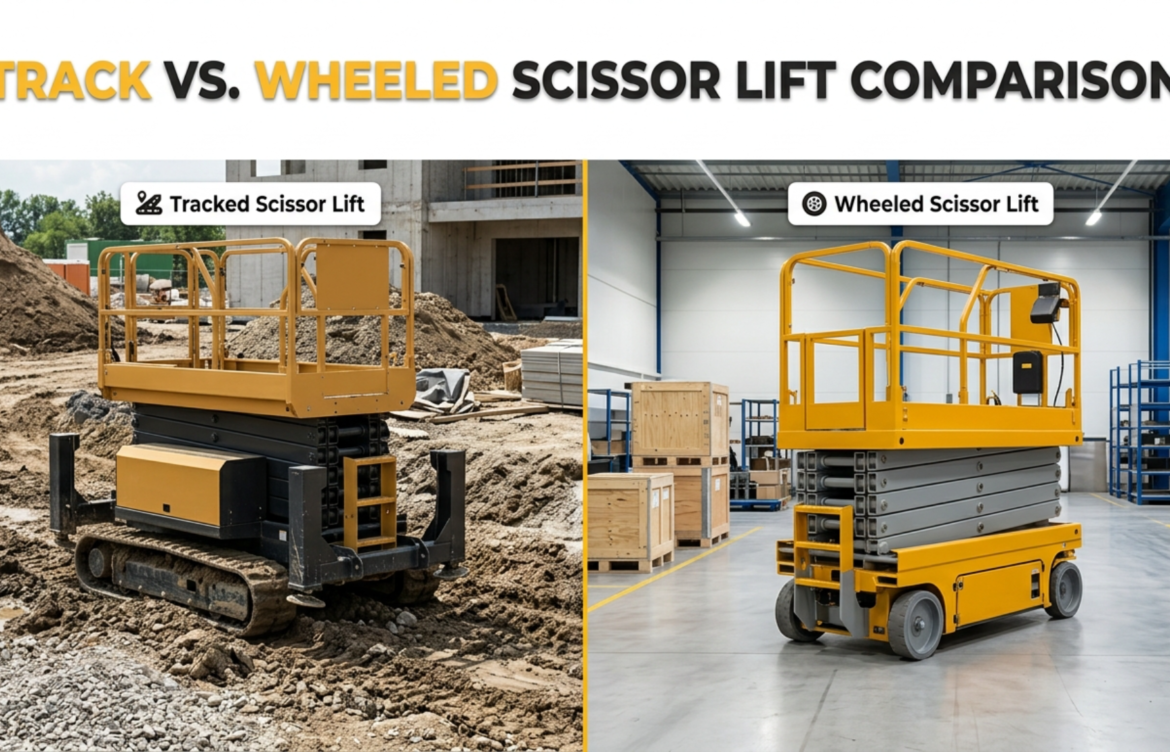
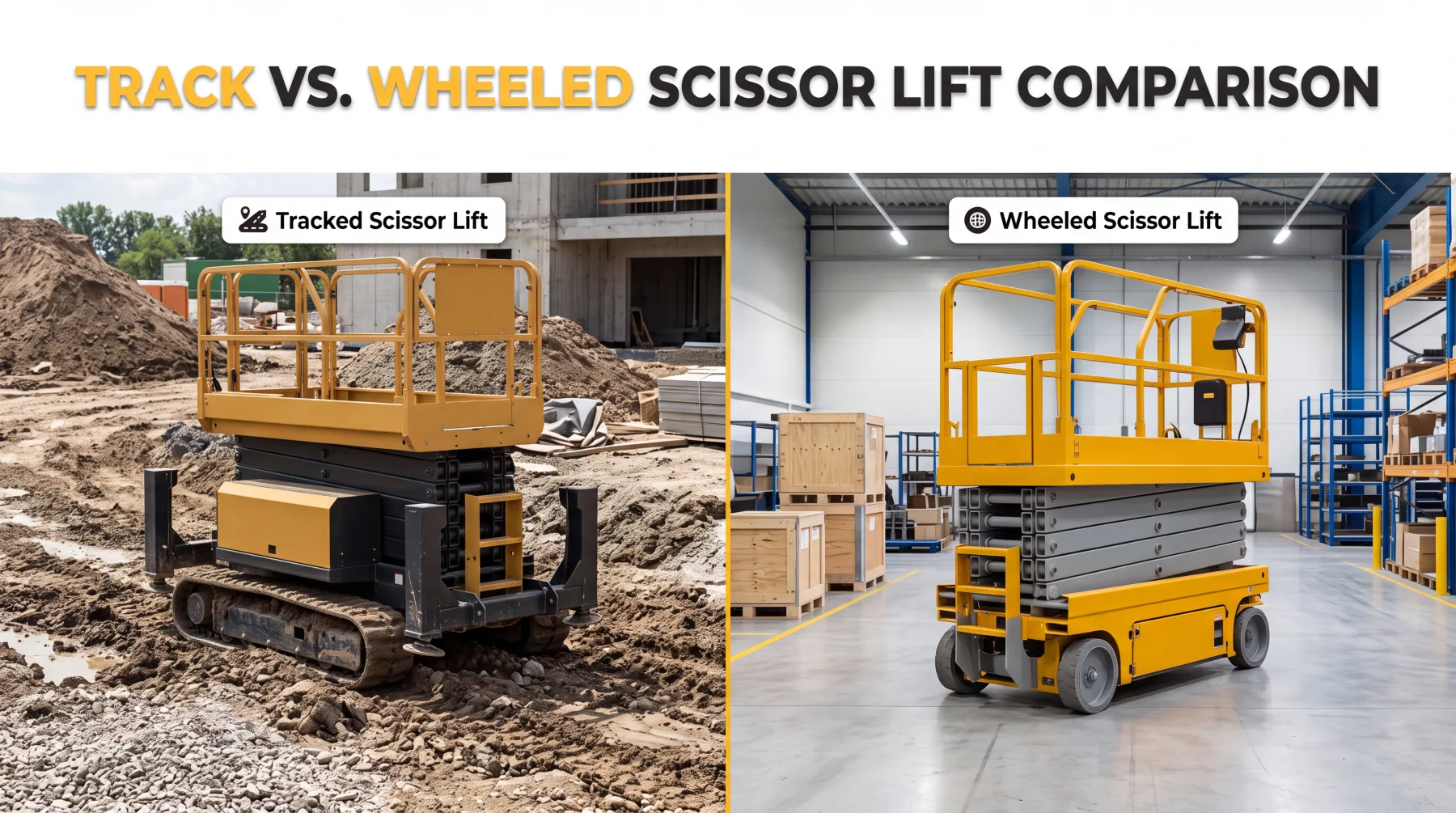
At their core, tracked and wheeled scissor lifts perform the same job: they elevate people, tools, and materials to a safe working height using a scissor mechanism beneath the platform. What separates them is the mobility system that carries the machine across the ground. A wheeled scissor lift rolls on tires, much like a vehicle, giving it speed and easy handling on firm, level surfaces. A tracked scissor lift moves on continuous rubber or steel tracks, similar to those on an excavator, which spread the machine’s weight and grip loose or uneven ground.
That single difference in how each machine moves drives everything about where it works best. Wheeled models thrive on prepared surfaces where firm footing is guaranteed, while tracked models are built to handle the unpredictable conditions of outdoor and unfinished sites. Their terrain capabilities and ideal environments diverge accordingly:
- Wheeled lifts: Fast, nimble, and best suited to indoor floors, warehouses, and paved lots.
- Tracked lifts: Stable and sure-footed on mud, gravel, grass, slopes, and rough ground.
- Mobility system: Tires for speed on hard surfaces versus tracks for traction on soft terrain.
Knowing which design fits your work is the foundation of a smart decision. A wheeled lift keeps indoor and paved projects moving quickly, while a tracked lift lets crews reach height safely on the kind of raw, uneven ground that would leave a wheeled machine stuck or unstable. Understanding this basic split between the two designs prepares you to weigh the specific strengths that follow.
Why Track Scissor Lifts Offer Better Ground Stability
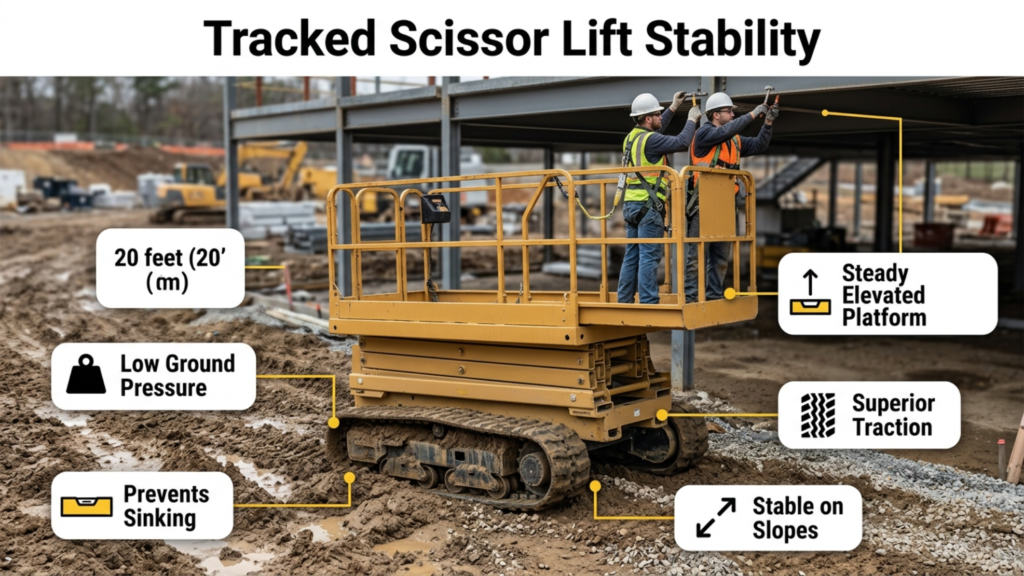
Tracked scissor lifts earn their reputation on difficult ground, and the reason comes down to how they distribute weight. Instead of concentrating the machine’s mass onto a few small tire contact points, tracks spread that weight across a long, wide surface area. This larger footprint reduces ground pressure dramatically, so the lift is far less likely to sink into soft soil, mud, or sand. On surfaces that would swallow a wheeled machine, a tracked lift stays on top and keeps working, which is exactly why these models dominate outdoor and unfinished sites.
That same weight distribution translates directly into better traction and stability. With more of the track gripping the ground at all times, the machine resists slipping and holds its footing on loose gravel, wet grass, and inclines. When the platform rises and the center of gravity climbs, this planted, secure base becomes even more valuable, giving operators the confidence to work at height without the machine feeling tippy or unsettled beneath them.
The stability advantages of tracked systems show up clearly across challenging conditions:
- Lower ground pressure that prevents sinking in soft, muddy, or sandy terrain.
- Improved traction on loose gravel, wet grass, and slippery surfaces.
- Greater stability on slopes and uneven ground where wheeled machines struggle.
- A steady platform that stays secure as lifting height increases.
For contractors working on construction sites, landscaping projects, or any ground that has not been paved, this reliability is a genuine safety and productivity benefit. A tracked scissor lift lets crews reach elevated work in places a wheeled machine simply cannot go, and it does so while keeping the platform stable and the operation moving. When your job site involves rough, soft, or sloped terrain, the tracked design delivers the sure footing that makes elevated work both possible and safe.
Advantages of Wheeled Scissor Lifts on Smooth Surfaces
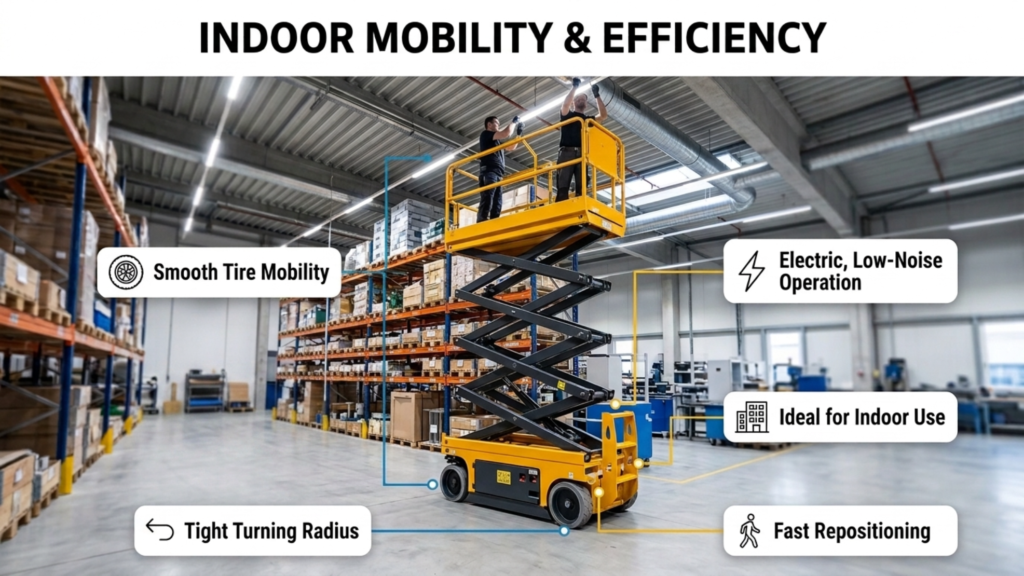
On firm, level surfaces, wheeled scissor lifts are hard to beat. Their tires roll smoothly and quickly across finished floors, letting operators move from one work area to the next with minimal effort. This speed matters enormously in settings where workers reposition the lift constantly throughout a shift, such as during installation, maintenance, or stocking tasks. Where a slower machine would waste time crawling between spots, a wheeled lift keeps the pace brisk and the workday productive.
Maneuverability is the other defining strength of wheeled models. Their tire-based steering allows tight turns and precise positioning, which is essential in the crowded, narrow aisles of a warehouse or the confined layout of an indoor facility. Operators can guide the machine cleanly around racking, equipment, and obstacles, placing the platform exactly where the work demands. This agility, combined with their generally lighter weight and cleaner operation, makes wheeled lifts the natural choice for interior environments.
Wheeled scissor lifts shine in a range of smooth-surface applications:
- Indoor facilities where clean, quiet, emission-free operation is important.
- Warehouses with narrow aisles that reward tight turning and precise handling.
- Paved areas and finished floors where firm footing lets tires perform at their best.
- High-movement tasks that require frequent, quick repositioning across a shift.
Many wheeled models run on electric power, which suits enclosed spaces by producing no exhaust and running quietly enough not to disrupt indoor work. That, combined with their speed and agility, explains why they are the standard choice for maintenance crews, warehouse teams, and contractors working inside buildings or across paved lots. When your work happens on smooth, level ground and demands frequent movement, the wheeled scissor lift delivers the speed, maneuverability, and easy handling that keep indoor and paved projects running efficiently.
Comparing Stability, Mobility, and Jobsite Performance
Placing the two designs side by side reveals clear trade-offs that shape real-world performance. Ground pressure is the starting point. Tracked lifts spread their weight over a large surface, giving them low ground pressure and the ability to work on soft, uneven terrain without sinking. Wheeled lifts concentrate weight onto their tires, which performs beautifully on firm ground but leaves them prone to bogging down or losing stability on anything loose or muddy. This single factor largely determines which machine belongs on a given site.
Mobility and turning ability tell a different story depending on the surface. On smooth floors, wheeled lifts move faster and turn more tightly, making them the more agile and efficient option for indoor and paved work. Tracked lifts move more slowly and cover ground at a steadier pace, but they maintain control on slopes and rough terrain where a wheeled machine would falter. Operator efficiency, then, depends entirely on the conditions: speed favors wheels indoors, while stability favors tracks outdoors.
Weighing these factors together clarifies where each machine performs best:
- Ground pressure: Tracked lifts excel on soft terrain; wheeled lifts suit firm surfaces.
- Turning ability: Wheeled models turn tighter and faster on smooth floors.
- Terrain handling: Tracked models hold stability on slopes and uneven ground.
- Operator efficiency: Speed wins indoors, while sure footing wins outdoors.
Neither design is universally superior, because each is engineered for a different environment. A wheeled lift that outperforms every rival in a warehouse would struggle on a muddy construction site, and a tracked lift that conquers rough ground offers little advantage on polished concrete. Comparing stability, mobility, and performance honestly against your actual conditions is what reveals the right choice, and that clarity protects both your productivity and your investment.
Choosing the Right Scissor Lift for Your Work Environment
Selecting the right scissor lift begins with an honest look at where and how you work. The surface you operate on is the most decisive factor. If your work happens indoors, in warehouses, or on paved lots, a wheeled lift delivers the speed and maneuverability those settings reward. If your job sites involve mud, gravel, grass, slopes, or unfinished ground, a tracked lift provides the stability and traction that keep elevated work safe. Matching the machine to your surface prevents the frustration and danger of using a lift in conditions it was never built for.
Beyond the surface, consider your lifting height requirements and how often you move the machine during a shift. Greater working heights raise the center of gravity, which makes ground stability even more important, so demanding heights on rough terrain point firmly toward a tracked design. Frequency of movement matters too, since tasks that require constant repositioning favor the quick, agile handling of a wheeled lift, while work that stays in one area longer can accommodate a slower tracked machine.
Weigh these key considerations before you decide:
- Jobsite conditions: Indoor and paved work suits wheeled lifts; outdoor and rough terrain suits tracked lifts.
- Surface type: Firm, level floors versus soft, uneven, or sloped ground.
- Lifting height: Greater heights on difficult terrain call for the stability of tracks.
- Frequency of movement: Constant repositioning favors the speed of wheeled models.
The goal is to match the lift’s strengths to the genuine demands of your work rather than choosing a machine by reputation or price alone. A wheeled lift keeps indoor and paved projects moving efficiently, while a tracked lift makes outdoor elevated work both possible and secure. When you assess your surfaces, heights, and movement needs honestly, you select a scissor lift that improves both safety and productivity across every job you take on.
After the Introduction
Track and Wheeled Scissor Lift Designs serve different working environments. Understanding their mobility, stability, and terrain performance helps contractors select safer and more productive equipment.
Track Stability Section
The main difference between Track and Wheeled Scissor Lift Designs is how each machine distributes its weight. Tracked models spread their weight across a wider surface, providing greater stability on soft or uneven ground.
Wheeled Lift Section
When comparing Track and Wheeled Scissor Lift Designs, wheeled models offer clear advantages on smooth floors. They move faster, turn more tightly, and reposition easily inside warehouses and industrial facilities.
Performance Comparison Section
Track and Wheeled Scissor Lift Designs perform differently because they are built for distinct conditions. Tracks prioritize traction and ground stability, while wheels prioritize speed and maneuverability.
Choosing the Right Lift Section
Selecting between Track and Wheeled Scissor Lift Designs requires evaluating the surface, lifting height, work location, and frequency of movement. Matching the lift to these conditions improves safety and reduces downtime.
Before the Conclusion
Contractors should compare Track and Wheeled Scissor Lift Designs based on actual jobsite requirements rather than price alone. The correct mobility system can significantly improve equipment performance.
Replace the Conclusion
Track and Wheeled Scissor Lift Designs each provide valuable advantages in the right environment. Wheeled lifts deliver speed and easy maneuverability on indoor floors and paved surfaces.
Tracked lifts provide stronger traction and stability on mud, grass, gravel, slopes, and unfinished ground. Their wider footprint also reduces the risk of sinking on soft terrain.
Understanding Track and Wheeled Scissor Lift Designs helps contractors choose equipment that improves safety, productivity, and long-term value.
Conclusion
Understanding the difference between tracked and wheeled scissor lifts comes down to matching the machine to your working environment. Wheeled lifts deliver speed, tight maneuverability, and clean operation on smooth, level surfaces, making them the go-to choice for indoor facilities, warehouses, and paved areas. Tracked lifts spread their weight for low ground pressure, strong traction, and dependable stability on soft, uneven, or sloped terrain where wheeled machines cannot safely go. Neither design is better in every case; each is built for a specific set of conditions. By weighing your job site surfaces, terrain, lifting height requirements, and how often you reposition the machine, you can confidently choose the model that keeps your crew safe and your work productive. Assess your conditions carefully, match them to the right design, and you will invest in a scissor lift that performs reliably for years to come.