 Trending
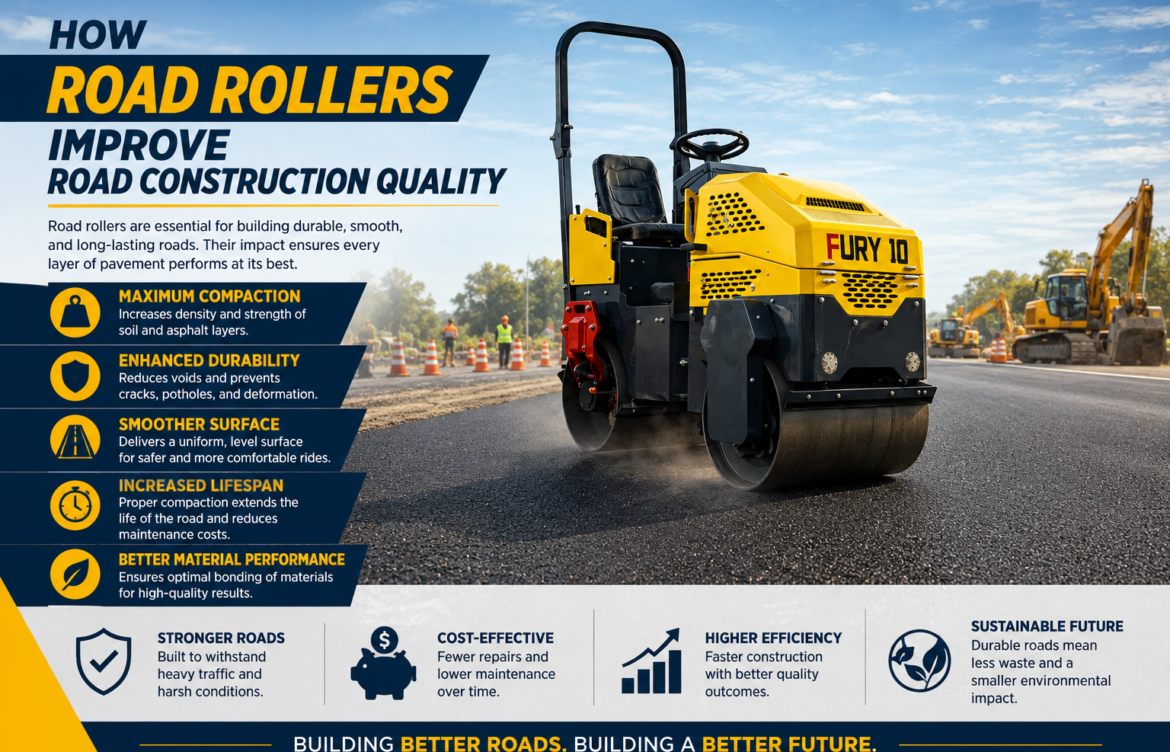
How Road Rollers Improve Road Construction Quality
How Different Roller Types Contribute to Quality
A road that lasts 20 years and a road that fails in five often start with the same materials. The difference comes down to compaction — and the road rollers that deliver it. Loose soil and freshly laid asphalt are full of air and voids. Left alone, that material settles unevenly, traps water, and breaks apart under traffic. The right roller, run the right way, squeezes those weaknesses out before they ever become problems.
This guide explains how road rollers raise the quality of every layer in a road, from the subgrade up to the finished asphalt mat. You’ll learn how compaction protects against potholes and cracking, how each roller type contributes at different stages, and how technique and modern features turn good materials into a durable surface.
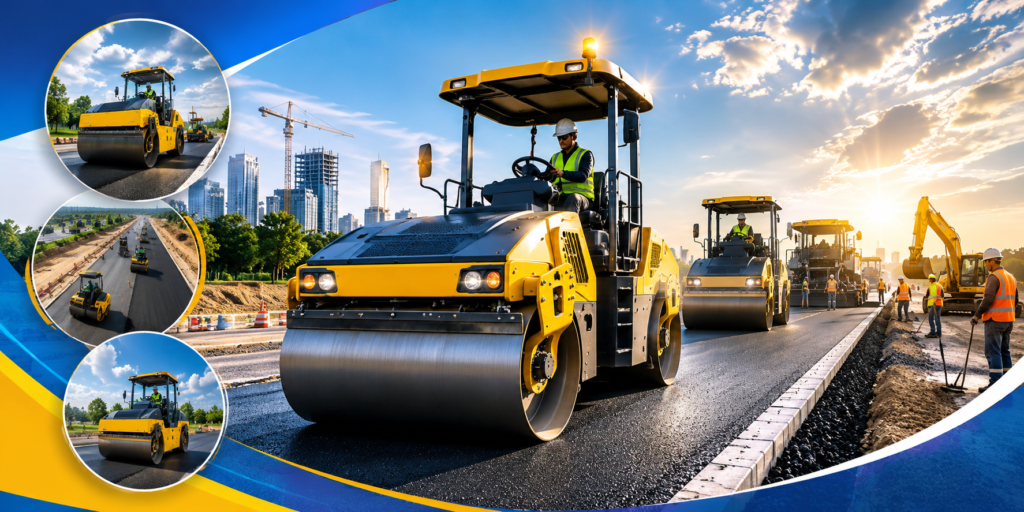
Here’s what we cover:
- How compaction builds structural integrity
- The roller types that deliver quality at each stage
- How density, vibration, and operator technique shape results
- The modern features that make consistent quality repeatable
How Compaction Builds Structural Integrity
Compaction is the process of pressing material together to remove air and force particles into tight contact. That single step does more for road quality than almost any other part of construction.
When a roller compacts soil or asphalt, it increases density. Higher density means greater load-bearing strength, so the surface carries traffic and structures without shifting. It also seals the material, keeping water out — and water is the leading cause of premature road failure.
So what does that mean on the job? A properly compacted subgrade and base give every layer above them a stable platform. Skip that foundation, and even a flawless asphalt surface will crack and settle as the ground beneath it moves. Quality starts at the bottom and builds upward, one compacted layer at a time.
Preventing Potholes, Cracking, and Rutting
Most common road defects trace back to poor compaction. Understanding the link helps crews see why every pass matters.
- Potholes form when water seeps into under-compacted material, weakens it, and traffic breaks the surface apart. Dense, sealed compaction blocks that water entry.
- Cracking appears when the base settles unevenly or the asphalt mat lacks proper density. Consistent compaction keeps the structure uniform and resistant to stress.
- Rutting develops when wheel loads push down weakly compacted asphalt over time. A properly densified mat holds its shape under repeated traffic.
- Premature failure results from any combination of the above, cutting a road’s service life dramatically.
The takeaway is straightforward: thorough, consistent compaction is the most cost-effective defense against the repairs, callbacks, and early resurfacing that erode a project’s margins.
How Different Roller Types Contribute to Quality
No single roller handles every stage of road construction. Quality comes from using the right machine at the right point in the process.
Single Drum Rollers: Building the Foundation
A single drum roller pairs one steel drum with pneumatic drive tires, making it the workhorse for soil and granular compaction. It densifies the subgrade, base, and aggregate layers that support everything above.
Smooth drums suit granular and mixed soils, while padfoot drums knead cohesive clay for deeper compaction. Get this stage right, and the road gains the stable foundation that prevents settling and cracking later.
Double Drum (Tandem) Rollers: Finishing the Asphalt
A double drum roller uses two steel drums and compacts on every pass, delivering the smooth, even finish asphalt demands. This is the primary machine for paving work.
Tandem rollers handle breakdown and finish passes on hot mix asphalt, pressing the mat to proper density before it cools. The result is a sealed, uniform surface that resists water, cracking, and rutting.
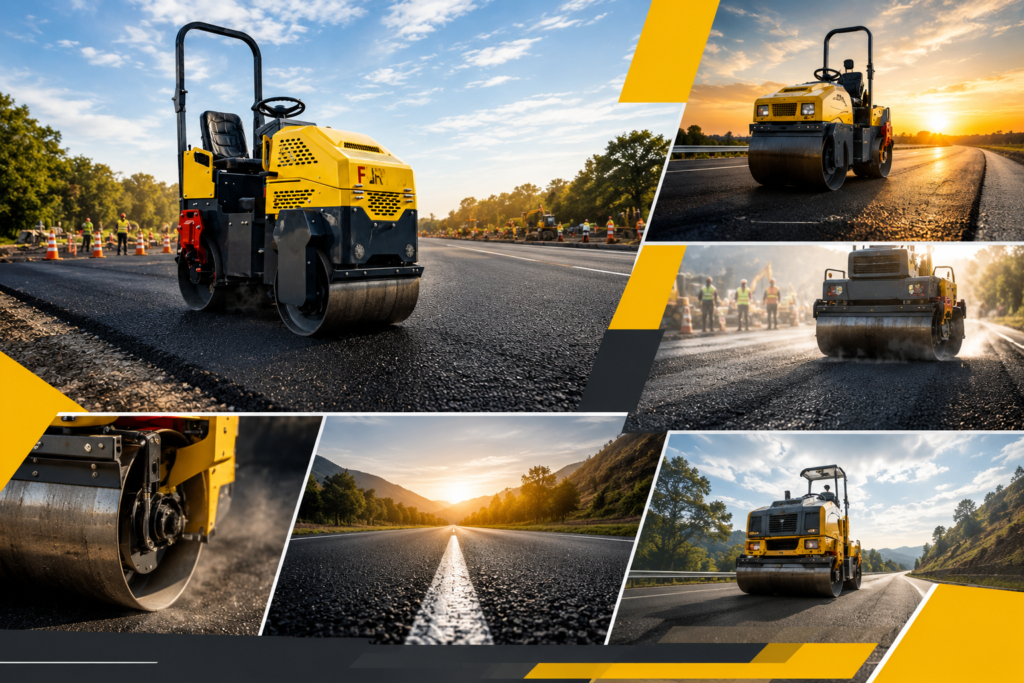
Pneumatic Tire Rollers: Sealing the Surface
A pneumatic tire roller uses rows of rubber tires that apply a kneading action, closing surface voids the steel drums leave behind. It typically works as the intermediate machine in the paving train, between breakdown and finish passes.
By sealing and densifying the mat, the pneumatic roller improves final surface density and durability — a quality step that high-traffic roads especially benefit from.
Compaction Density: The Measure of Quality
Density is how the industry measures whether compaction succeeded. Specifications set a target density, usually expressed as a percentage of a material’s maximum achievable density, and crews compact until they hit it.
Reaching target density matters because under-compaction and over-compaction both cause problems. Too little density leaves voids that invite water and early failure. Too much can crush aggregate and damage the mat. Rollers achieve the right density through controlled passes, appropriate weight, and proper vibration settings — verified with density gauges or testing.
So what? Hitting consistent density across the entire surface, not just in spots, is what separates a road that passes inspection and lasts from one that fails testing and demands rework.
Vibratory vs. Static Compaction
How a roller transfers force into the material directly affects quality outcomes. There are two methods, and knowing when to use each is key.
Static compaction relies on the machine’s weight alone. It’s gentle and controlled, which makes it ideal for finish passes where vibration could mark the surface or over-compact a thin lift.
Vibratory compaction adds a rotating eccentric weight inside the drum, creating rapid impacts that boost compaction force without adding machine weight. This densifies deeper lifts faster and more effectively, making it the standard for most soil and asphalt work.
The ability to switch vibration off is just as important as turning it on. Operators kill the vibration for finish passes, on bridges, or near sensitive structures where it could cause damage. Matching the method to the stage protects both density and surface quality.
Operator Technique and Pass Patterns
Even the best roller produces poor results in careless hands. Technique is where machine capability becomes finished quality.
A few practices drive consistent outcomes:
- Maintain proper overlap. Each pass should overlap the previous one — typically by a portion of the drum width — so no strip is left under-compacted.
- Control rolling speed. Moving too fast reduces the impacts per foot and leaves density gaps. A steady, measured pace produces uniform results.
- Compact asphalt while hot. Asphalt must be rolled within its temperature window. Once it cools, achieving target density becomes difficult or impossible.
- Follow a consistent pattern. Working breakdown, intermediate, and finish passes in a planned sequence ensures the whole mat reaches density evenly.
A practical example: a crew that rolls asphalt too slowly to keep up with the paver lets the mat cool before reaching density — producing a weak, porous surface even with a capable machine. Disciplined, well-timed passes are what turn equipment into quality.
Modern Features That Deliver Consistent Quality
Today’s rollers include features that make high-quality results more repeatable and less dependent on guesswork.
Adjustable Amplitude and Frequency
Amplitude is the height of the drum’s vibratory movement; frequency is how many vibrations it produces per minute. High amplitude drives deep compaction in thick lifts, while low amplitude suits thin asphalt and finish work. Machines with selectable settings let one roller serve multiple stages without over- or under-compacting.
Water Spray Systems
On asphalt rollers, a water spray system keeps the drums wet so hot asphalt doesn’t stick and tear the surface. Clean, well-maintained nozzles protect finish quality — clogged ones are a common cause of surface defects.
Telematics and Compaction Monitoring
Telematics and intelligent compaction systems track pass counts, coverage, and density in real time. Operators see exactly where they’ve achieved target density and where another pass is needed, reducing both weak spots and wasteful over-rolling. The result: more uniform quality across the entire surface and documented proof for inspection.
Why Road Rollers Are Essential to Durable Roads
A road is only as good as its compaction, and road rollers are the machines that make compaction happen. They build structural integrity layer by layer, seal out the water that destroys surfaces, and press asphalt to the density that resists cracking and rutting for decades. Single drum rollers establish the foundation, tandem rollers finish the asphalt, and pneumatic rollers seal the mat — each contributing quality at its stage.
Get compaction right, and a road performs reliably year after year with minimal repair. To put this into practice, match the roller type to each stage, hit your specified density with disciplined pass patterns, and lean on modern features like adjustable amplitude and compaction monitoring to keep results consistent. Do that, and every road you build will stand as proof of the work behind it.
How Compaction Builds Structural Integrity
Compaction is the process of pressing material together to remove air and force particles into tight contact. That single step does more for road quality than almost any other part of the construction process.
When road rollers compact soil or asphalt, they dramatically increase density. Higher density means greater load-bearing strength, allowing the surface to carry heavy commercial traffic without shifting. It also seals the material, keeping water out. According to the Federal Highway Administration (FHWA), water intrusion is the leading cause of premature road failure.
A properly compacted subgrade and base give every layer above them a stable platform. If you skip that foundation, even a flawless asphalt surface will crack and settle as the ground beneath it moves. Quality starts at the bottom and builds upward, one compacted layer at a time.
Preventing Potholes, Cracking, and Rutting
Most common road defects trace back to poor compaction. Understanding this link helps paving crews see why every single pass matters. Thorough, consistent compaction using modern road rollers is the most cost-effective defense against the repairs, callbacks, and early resurfacing that erode a project’s margins.
| Road Defect | Cause | How Compaction Prevents It |
| Potholes | Water seeps into under-compacted material, weakens it, and traffic breaks the surface apart. | Dense, sealed compaction blocks water entry, maintaining the internal integrity of the road. |
| Cracking | The base settles unevenly or the asphalt mat lacks proper density. | Consistent compaction keeps the foundational structure uniform and highly resistant to stress. |
| Rutting | Wheel loads push down weakly compacted asphalt over time. | A properly densified mat holds its shape and structural integrity under repeated heavy traffic. |
(Need to upgrade your fleet before your next paving project? Check out our guide to heavy equipment rentals to find the right machines.)
How Different Road Rollers Contribute to Quality
No single road roller handles every stage of road construction. True quality comes from using the right machine at the right point in the process.
Single Drum Rollers: Building the Foundation
A single drum roller pairs one steel drum with pneumatic drive tires, making it the workhorse for soil and granular compaction. It densifies the subgrade, base, and aggregate layers that support everything above. Smooth drums suit granular and mixed soils, while padfoot drums knead cohesive clay for deeper compaction. Getting this stage right ensures the road gains a stable foundation.
Double Drum (Tandem) Rollers: Finishing the Asphalt
A double drum roller uses two steel drums and compacts on every pass, delivering the smooth, even finish that asphalt demands. As the primary machine for paving work, tandem road rollers handle breakdown and finish passes on hot mix asphalt, pressing the mat to proper density before it cools. The result is a sealed, uniform surface.
Pneumatic Tire Rollers: Sealing the Surface
A pneumatic tire roller uses rows of rubber tires that apply a kneading action, closing surface voids the steel drums leave behind. It typically works as the intermediate machine in the paving train. By sealing and densifying the mat, these specialized road rollers improve final surface density and durability.
Compaction Density: The Measure of Quality
Density is how the construction industry measures whether compaction succeeded. Specifications set a target density, usually expressed as a percentage of a material’s maximum achievable density, and crews operate their road rollers until they hit that exact number.
Reaching target density matters because both under-compaction and over-compaction cause critical problems:
- Too little density leaves voids that invite water and early failure.
- Too much density can crush aggregate and physically damage the mat.
According to guidelines from the Asphalt Institute, road rollers achieve the right density through controlled passes, appropriate weight, and proper vibration settings—verified continuously with density gauges or core testing. Hitting consistent density across the entire surface is what separates a road that passes inspection from one that demands expensive rework.
Vibratory vs. Static Compaction
How road rollers transfer force into the material directly affects quality outcomes. Knowing when to use each method is key to a durable road.
- Static Compaction: Relies on the machine’s weight alone. It is gentle and controlled, making it ideal for finish passes where vibration could mark the surface or over-compact a thin lift.
- Vibratory Compaction: Adds a rotating eccentric weight inside the drum, creating rapid impacts that boost compaction force without adding machine weight. This densifies deeper lifts faster and more effectively.
The ability to switch vibration off is just as important as turning it on. Operators kill the vibration for finish passes, on bridges, or near sensitive structures to prevent damage.
Operator Technique and Pass Patterns
Even the best road rollers produce poor results in careless hands. Technique is where machine capability becomes finished quality. A few specific practices drive consistent outcomes:
- Maintain proper overlap: Each pass should overlap the previous one (typically by a portion of the drum width) so no strip is left under-compacted.
- Control rolling speed: Moving too fast reduces the impacts per foot and leaves density gaps. A steady, measured pace produces uniform results.
- Compact asphalt while hot: Asphalt must be rolled within its specific temperature window. Once it cools, achieving target density becomes difficult or impossible.
- Follow a consistent pattern: Working breakdown, intermediate, and finish passes in a planned sequence ensures the whole mat reaches density evenly.
Modern Features That Deliver Consistent Quality
Today’s road rollers include smart features that make high-quality results highly repeatable and far less dependent on operator guesswork.
- Adjustable Amplitude and Frequency: Amplitude is the height of the drum’s vibratory movement; frequency is how many vibrations it produces per minute. Machines with selectable settings let one roller serve multiple stages without over- or under-compacting the material.
- Water Spray Systems: On asphalt road rollers, a water spray system keeps the drums wet so hot asphalt doesn’t stick and tear the surface. Clean, well-maintained nozzles protect finish quality.
- Telematics and Compaction Monitoring: Intelligent compaction systems track pass counts, coverage, and density in real time. Operators see exactly where they’ve achieved target density and where another pass is needed, reducing weak spots and documenting proof for inspection.
Why Road Rollers Are Essential to Durable Roads
A road is only as good as its compaction, and road rollers are the machines that make compaction happen. They build structural integrity layer by layer, seal out the water that destroys surfaces, and press asphalt to the density that resists cracking and rutting for decades.
Get compaction right, and a road performs reliably year after year with minimal repair. Match the roller type to each stage, hit your specified density with disciplined pass patterns, and lean on modern technology to keep results consistent. Do that, and every road you build will stand as proof of the hard work behind it.
(Ready to start your next project? Contact our equipment specialists to find the exact road rollers you need to get the job done right.)