 Trending
How Does a Road Roller Work?
What Is a Road Roller and How Does It Work?
A road roller is one of the most important machines on a construction site because it does something every strong surface needs: it compacts material. Without proper compaction, roads crack, driveways settle, trenches sink, and asphalt surfaces fail early.
This guide is for contractors, construction crews, project managers, and equipment buyers who want a clear understanding of what road rollers do and why they matter. You will learn what a road roller is, how compaction works, the main types of rollers, and when to use them for soil, gravel, and asphalt projects.
Key takeaways: road rollers improve surface strength, reduce air gaps in materials, create smoother finishes, and help construction projects last longer.\
What Is a Road Roller?
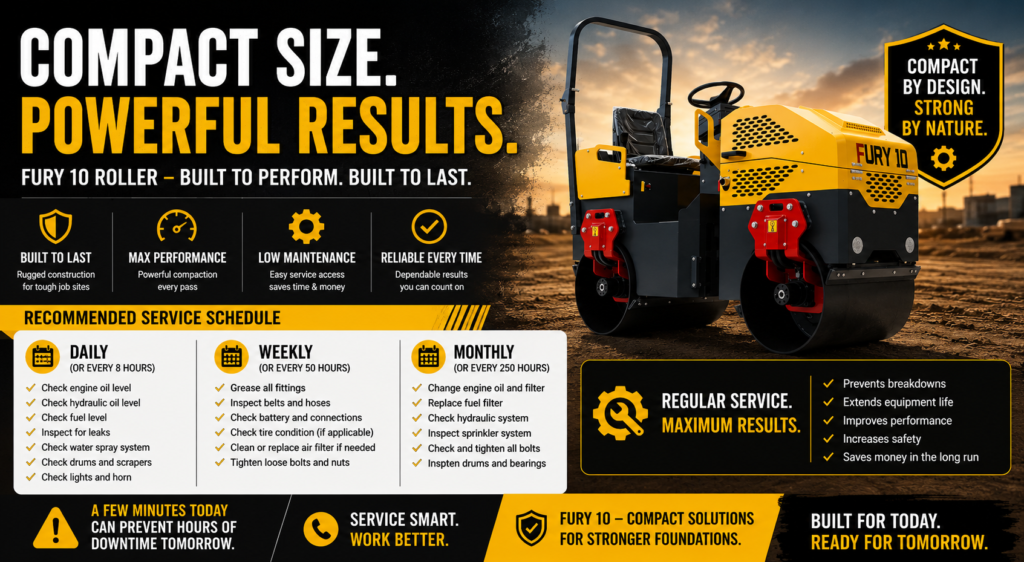
A road roller is a heavy construction machine used to compact soil, gravel, asphalt, crushed stone, and other base materials. It uses its weight, drum movement, vibration, or tire pressure to press material into a denser and more stable layer.
You will often see road rollers on:
- Road construction sites
- Asphalt paving projects
- Parking lot installations
- Driveway construction
- Site preparation jobs
- Utility trench backfill work
- Foundation and sub-base preparation
The machine may look simple, but its job is critical. A road roller helps remove air pockets and weak spots from the material below a surface. This creates a stronger base that can support traffic, buildings, equipment, and long-term wear.
A common mistake is thinking a roller only “flattens” the ground. In reality, its main purpose is compaction. Flattening improves appearance, but compaction improves strength.
Why Compaction Matters in Construction
Compaction makes construction materials stronger by pressing particles closer together. This increases density and helps the surface resist shifting, cracking, and settling.
Loose material contains air gaps. When traffic, rain, or heavy loads hit that material, those gaps allow movement. Over time, the surface can sink, rut, or break apart.
Proper compaction helps:
- Improve load-bearing strength
- Reduce future settlement
- Create a smoother finished surface
- Improve water resistance
- Extend pavement life
- Reduce costly rework
For example, if a crew paves asphalt over loose gravel, the surface may look fine at first. But once vehicles start driving over it, the weak base can shift. Cracks and low spots may appear quickly. A road roller helps prevent that problem by compacting the base before the final surface goes down.
How Does a Road Roller Work?
A road roller works by applying pressure to construction materials until they become denser and more stable. Depending on the machine, this pressure may come from static weight, vibration, pneumatic tires, or a combination of these forces.
The basic process is straightforward:
- Material is placed and spread across the work area.
- The roller moves across the surface in controlled passes.
- The drum or tires press the material downward.
- Air gaps are reduced as particles lock together.
- The crew repeats passes until the required density is reached.
The number of passes depends on the material, roller type, layer thickness, moisture level, and project specifications.
Static Weight Compaction
Static compaction uses the machine’s own weight to compress material. As the roller moves forward, the drum presses down on the surface.
This method works well for certain asphalt finishing tasks and lighter compaction needs. It is simple, consistent, and controlled.
However, static force may not be enough for deeper layers or tougher materials. That is why many modern rollers also use vibration.
Vibratory Compaction
Vibratory rollers use a vibrating drum to deliver rapid force into the material. Inside the drum, rotating weights create vibration. This movement helps particles shift, settle, and lock together more tightly.
Vibration is especially useful for compacting:
- Granular soil
- Crushed stone
- Gravel
- Asphalt
- Road base materials
Vibratory compaction is powerful because it reaches deeper than static weight alone. It can reduce the number of passes needed and help crews complete work faster.
A practical example: when compacting a gravel road base, a vibratory smooth drum roller can help the aggregate settle into a firm, even layer before asphalt is placed.
Pneumatic Pressure Compaction
Pneumatic rollers use rubber tires instead of steel drums. These tires apply kneading pressure to the material. Rather than simply pressing straight down, they flex and shape the surface as they move.
This kneading action is useful for asphalt because it helps seal the surface and bind the mix together. Pneumatic rollers can also help compact certain soils and base materials.
The tires are often arranged in staggered patterns so they cover the full working width. Operators may also adjust tire pressure or ballast weight to match the project.
Main Types of Road Rollers
Different rollers are built for different materials and job site conditions. Choosing the right type improves productivity, surface quality, and long-term performance.
Smooth Drum Rollers
Smooth drum rollers have one or two steel drums with a flat surface. They are commonly used for asphalt, gravel, sand, and other granular materials.
There are two common designs:
- Single drum rollers: One steel drum in front and tires in the rear.
- Double drum rollers: Steel drums in both the front and rear.
Single drum rollers are often used for soil and base compaction. Double drum rollers are common in asphalt paving because they provide smooth, even contact across the surface.
Smooth drum rollers are