 Trending
Core of Your Road Roller Buying Guide
Road Roller Buying Guide for Contractors
Buy the wrong road roller and the cost shows up on every job. An undersized machine leaves you with weak compaction and failed density tests. A roller built for soil when you need asphalt finish quality leaves marks, ridges, and callbacks. Either mistake eats into margin and reputation — two things contractors can’t afford to lose.
This guide walks contractors, construction business owners, road builders, paving crews, and equipment buyers through every factor that determines the right road roller for the work. You’ll learn how the main roller types differ, how compaction method affects results, and how to match a machine to your specific applications — from subbase and granular soil to asphalt paving and parking lots.
Here’s what we cover:
- The main road roller types and what each does best
- How compaction method, weight, and drum settings affect results
- Key specs to evaluate: engine power, maneuverability, visibility, and serviceability
- How to weigh dealer support and total cost of ownership before you buy
Start with the Job, Not the Machine
The right roller starts with an honest look at the work you actually do.
Compaction requirements vary widely. Compacting deep granular fill demands a very different machine than finishing a hot asphalt surface. Before comparing models, define your typical applications clearly:
- Are you compacting subbase, granular soil, or cohesive clay?
- Do you finish asphalt on roads, lots, or driveways?
- What lift thickness do you typically work with?
- How wide are your typical paving or compaction passes?
- Do you serve one application most of the time, or a mix across many jobs?
The more specific you are about the work, the more precisely you can match a roller to it. A crew that spends most of its hours on asphalt paving needs a different machine than one preparing roadbeds and building pads all season.
The Main Road Roller Types
Road rollers fall into three primary categories, each engineered for a different compaction job. Choosing the right type is the single most important decision in this purchase.
Single Drum Rollers
A single drum roller pairs one steel drum at the front with pneumatic drive tires at the rear, making it the workhorse for soil and granular compaction.
The steel drum delivers concentrated compaction force, while the rubber drive tires provide traction across rough, uneven ground. Most single drum rollers use vibratory compaction to densify deep lifts of soil, gravel, and granular subbase.
Best suited for:
- Subbase and base course compaction
- Granular fill and aggregate
- Roadbed and building pad preparation
- Site development and earthwork
Many single drum models come in smooth drum or padfoot (sheepsfoot) configurations. Smooth drums work well on granular and mixed soils, while padfoot drums excel in cohesive clay where the protruding feet knead the material for deeper compaction.
Double Drum Rollers
A double drum (tandem) roller uses two steel drums — one front, one back — and is the standard choice for asphalt compaction.
With steel drums at both ends, the machine compacts on every pass and delivers the smooth, even finish that asphalt work demands. Tandem rollers are built for the controlled, repeatable passes that produce proper density and surface quality on hot mix asphalt.
Best suited for:
- Asphalt paving on roads and highways
- Parking lots and commercial surfaces
- Driveways and residential paving
- Patch and overlay work
Double drum rollers typically include water spray systems that keep the drums wet, preventing hot asphalt from sticking and tearing the surface. For any contractor focused on paving, this is the core machine.
Pneumatic Tire Rollers
A pneumatic tire roller (PTR) uses rows of rubber tires instead of steel drums, applying a kneading action that seals and densifies asphalt surfaces.
The overlapping rubber tires work the material, closing surface voids and producing a tight, sealed finish. PTRs are often used as an intermediate roller in the asphalt paving train, between the breakdown and finish passes.
Best suited for:
- Intermediate asphalt compaction
- Sealing and densifying surface mats
- Chip seal and surface treatment work
- Improving surface density on highway paving
Tire pressure is adjustable on most PTRs, letting operators tune the contact pressure to the mix and lift. For large paving operations, a PTR rounds out the compaction train and improves final surface quality.
Understand Compaction Method
Compaction method determines how the roller transfers force into the material — and it directly affects which jobs the machine handles well.
Static compaction relies on the machine’s own weight to compress material. It’s simple, gentle, and well-suited to finish passes on asphalt where vibration could over-compact or mark the surface.
Vibratory compaction adds a rotating eccentric weight inside the drum that generates rapid impacts. This dramatically increases compaction force without adding machine weight, allowing the roller to densify deeper lifts faster. Most modern soil and asphalt rollers offer vibratory operation.
The practical takeaway: Vibratory rollers deliver more compaction power and productivity for most applications. The ability to switch vibration off matters too — operators turn it off for finish passes, on bridges, or near sensitive structures where vibration could cause problems.
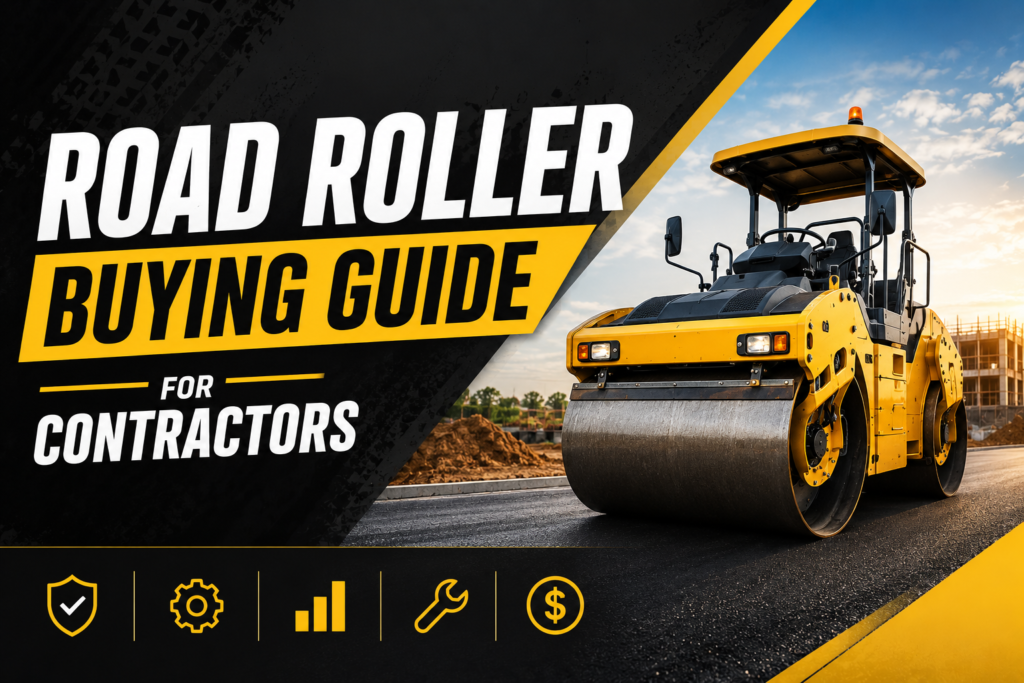
Match Operating Weight to Your Work
Operating weight is a primary driver of compaction force, and matching it to your application protects both performance and your surfaces.
A heavier roller delivers more static force, which helps on deep lifts and dense granular material. But more weight is not always better. On thin asphalt lifts, an overly heavy roller can crush aggregate, push material, or over-compact the mat.
General weight guidance by application:
- Light asphalt and patch work: 1 to 4 tons
- Parking lots and commercial paving: 3 to 9 tons
- Highway asphalt paving: 9 to 14 tons
- Soil and subbase compaction: 7 to 20 tons depending on lift depth
Match the weight class to your typical lift thickness and material. A common mistake is buying the heaviest machine “to be safe” — which leads to surface damage on lighter work and higher fuel and transport costs across the board.
Evaluate Drum Width
Drum width determines how much area you cover per pass, which directly affects productivity.
A wider drum covers more ground per pass, reducing the number of passes needed and speeding up the job. But wider isn’t automatically better. On narrow driveways, tight parking lots, or confined urban work, a wide drum becomes a liability that’s hard to position cleanly.
Match drum width to your typical work area:
- Narrow access and small jobs: Choose a compact drum width for maneuverability
- Open roads and large lots: Choose a wider drum to maximize coverage and productivity
For crews running a mix of job sizes, look for a width that handles your most common application well rather than optimizing for the extremes.
Amplitude and Frequency Settings
Amplitude and frequency control how vibratory compaction transfers energy into the material — and machines that let you adjust them give you far more versatility.
Amplitude is the height of the drum’s vibratory movement. High amplitude delivers deep compaction force, ideal for thick lifts of soil or granular base. Low amplitude provides gentler compaction suited to thin asphalt lifts and finish work.
Frequency is how many vibrations the drum produces per minute. Higher frequency at lower amplitude produces a smooth, even surface on asphalt, while the right frequency-amplitude balance prevents surface marks and over-compaction.
Why it matters: A roller with selectable amplitude settings can serve multiple applications — deep soil compaction on one job, careful asphalt finishing on the next. If you work across varied applications, prioritize a machine with adjustable settings over a single-mode roller.
Match the Roller to Your Application
Here’s a quick reference to align roller type with common compaction jobs:
| Application | Recommended Roller Type |
|---|---|
| Subbase and granular soil | Single drum (smooth) vibratory |
| Cohesive clay compaction | Single drum (padfoot) vibratory |
| Highway asphalt paving | Double drum tandem + pneumatic tire |
| Parking lots and commercial surfaces | Double drum tandem |
| Driveways and residential paving | Compact double drum tandem |
| Chip seal and surface treatment | Pneumatic tire roller |
| Patch and overlay work | Compact tandem or static roller |
Use this as a starting point, then confirm the specific weight, drum width, and amplitude settings against your real lift depths and material types.
Engine Power and Performance
Engine power affects gradeability, productivity, and how well the machine handles demanding conditions.
A roller needs enough power to maintain consistent travel speed and vibration under load, climb the grades on your sites, and keep working through a full shift without straining. Underpowered machines slow down on inclines and struggle to sustain compaction output on tough material.
When evaluating engines, also consider:
- Fuel efficiency under typical working load — a recurring cost across operating hours
- Emissions compliance for the regions where you work
- Cold-start reliability if you operate in colder climates
- Service intervals and how they fit your maintenance schedule
Ask the dealer for real-world fuel consumption data on machines doing work similar to yours. Rated horsepower alone tells you little about operating cost.
Maneuverability and Control
A roller that’s hard to position wastes time and produces inconsistent compaction.
Maneuverability matters most on confined sites, tight parking lots, and around obstacles. Look for features that improve control and positioning:
- Articulated steering for tighter turning and accurate drum tracking
- Drum offset capability for compacting close to curbs and edges
- Smooth, responsive travel control for consistent overlap between passes
- Crab steering on some tandem models for working close to barriers
For paving crews, the ability to position the roller precisely against curbs, joints, and edges directly affects finish quality and reduces the need for hand compaction.
Cab Comfort and Visibility
Operator comfort and clear sightlines aren’t luxuries — they drive productivity, accuracy, and safety across long shifts.
Comfort keeps operators sharp through demanding days. Look for an ergonomic operator station, adjustable seating, intuitive controls, and effective heating and cooling for year-round work. Reduced noise and vibration limit fatigue and help operators maintain consistent passes.
Visibility is critical on a roller, where the operator must see the drum edges, the surface, and the surrounding work area. Prioritize:
- Clear sightlines to both drum edges for accurate overlap
- Good visibility to the mat surface and compaction line
- Minimal blind spots around people and obstacles
- Available camera systems for added awareness on larger machines
On asphalt work especially, the operator’s ability to see the drum edge and maintain proper overlap directly affects surface quality and density.
Maintenance Access and Serviceability
A roller that’s hard to service costs you uptime, and downtime on an active paving job is expensive.
Before committing to a machine, evaluate how easily routine maintenance gets done:
- Daily checks: Can you inspect fluid levels, the water spray system, and scrapers quickly and safely?
- Service access: Do panels open fully to reach filters, the engine, and hydraulic components?
- Water system maintenance: On asphalt rollers, are spray nozzles and filters easy to clean and replace? Clogged nozzles cause sticking and surface damage.
- Drum scrapers: Are they easy to inspect and adjust to keep drums clean?
Simple, accessible maintenance keeps the machine running and reduces the temptation to defer service. A well-maintained roller delivers consistent compaction far longer than a neglected one.
Dealer Support and Parts Availability
The dealer behind the machine matters as much as the machine itself.
A roller that goes down mid-pour with no local support becomes a serious liability. Before buying, evaluate the dealer network:
- Is a qualified dealer within reasonable distance of your primary work areas?
- Do they stock common wear parts — scrapers, spray nozzles, filters, belts?
- What are their typical service response times during peak paving season?
- Do they have certified technicians familiar with your specific model?
Strong dealer support keeps your machine working when it matters most. Verify local coverage rather than relying on a brand’s national reputation — coverage varies significantly by region.
Calculate Total Cost of Ownership
Purchase price is the most visible number, but it tells only part of the story. Total cost of ownership (TCO) reveals what the roller truly costs over the years you operate it.
A complete TCO picture includes:
- Purchase price or financing cost
- Fuel consumption across your typical operating hours
- Routine maintenance — filters, fluids, scrapers, spray nozzles, and scheduled service
- Wear components including drums and tires over the machine’s life
- Unplanned repairs and warranty coverage
- Transport costs between sites, which rise with machine weight
- Resale or residual value when you upgrade or trade
Build a five-year cost model for each machine on your shortlist. A cheaper roller that burns more fuel, needs frequent repairs, and depreciates fast often costs more than a quality machine that runs reliably and holds its value.
Common Mistakes to Avoid
- Buying one machine for every job. Soil rollers and asphalt rollers are built differently. Forcing one machine to do both compromises results on both.
- Over-sizing the roller. A machine heavier than your typical lift requires damages thin surfaces and raises fuel and transport costs.
- Ignoring the water spray system. On asphalt rollers, a poorly designed or hard-to-service spray system causes sticking and surface defects.
- Skipping the dealer check. A capable roller with distant support becomes a problem the first time it breaks down during a pour.
- Judging by spec sheet alone. How the machine performs and positions on a real demo reveals more than any printed number.
Match the Machine to Your Projects
The right road roller handles your typical material, delivers proper compaction at your usual lift depths, positions cleanly on your job sites, and stays supported by a dealer who keeps you running — all at a total cost that protects your margin.
Before you buy, work through these steps:
- Define your primary application — soil and subbase, asphalt paving, or a mix
- Match the roller type — single drum for soil, double drum for asphalt, pneumatic for sealing and intermediate passes
- Confirm weight, drum width, and amplitude against your real lift depths and surfaces
- Evaluate maneuverability, visibility, and serviceability for your typical sites
- Verify dealer support in your working area before committing
- Build a five-year TCO model for every machine on your shortlist
Be honest about the work you actually do most of the time. The contractors who get the most from their equipment match the machine to their real projects — not to a hypothetical maximum or the lowest sticker price. Request a demo on your own site with your own material whenever you can, and spend real time at the controls before you decide.
When you’re ready to compare specific models, bring this checklist to your dealer and ask the hard questions about compaction performance, serviceability, and support. The roller that earns your confidence through those conversations is the one worth buying.
Road Roller Buying Guide for Contractors in 2026
When looking for a comprehensive road roller buying guide, understanding how to match the machine to your jobsite is the absolute first step. Buy the wrong compaction machine and the cost shows up on every job. An undersized unit leaves you with weak compaction and failed density tests. A roller built for soil when you need asphalt finish quality leaves marks, ridges, and callbacks. Either mistake eats into your margin and reputation — two things contractors can’t afford to lose.
As we move into 2026, the global road roller market is projected to reach $5.23 billion, fueled by a booming demand for both infrastructure construction and maintenance. With approximately 60% of demand coming directly from road construction, manufacturers are rapidly evolving their equipment. This road roller buying guide walks contractors, construction business owners, paving crews, and used equipment buyers through every factor that determines the right road roller for the work.
You’ll learn how the main roller types differ, how the compaction method affects results, and how to utilize this road roller buying guide to match a machine to your specific applications — from subbase and granular soil to asphalt paving and parking lots.
Why You Need a Road Roller Buying Guide: Start with the Job
The foundation of any good road roller buying guide is an honest look at the work you actually do. Compaction requirements vary widely. Compacting deep granular fill demands a very different machine than finishing a hot asphalt surface.
Before comparing models or exploring features (similar to evaluating mini excavator features), define your typical applications clearly:
- Are you compacting subbase, granular soil, or cohesive clay?
- Do you finish asphalt on roads, lots, or driveways?
- What lift thickness do you typically work with?
- How wide are your typical paving or compaction passes?
The more specific you are about the work, the more precisely you can use this road roller buying guide to match a machine to it. A crew that spends most of its hours on asphalt paving needs a different machine than one preparing roadbeds all season.
The Main Types: Core of Your Road Roller Buying Guide
Road rollers fall into three primary categories, each engineered for a different compaction job. Choosing the right type is the single most important decision in this road roller buying guide.
Single Drum Rollers
A single drum roller pairs one steel drum at the front with pneumatic drive tires at the rear, making it the workhorse for soil and granular compaction.
The steel drum delivers concentrated compaction force, while the rubber drive tires provide traction across rough, uneven ground.
- Best suited for: Subbase and base course compaction, granular fill, roadbed preparation, and site development.
- Configurations: Many models come in smooth drum or padfoot (sheepsfoot) configurations. Smooth drums work well on granular and mixed soils, while padfoot drums excel in cohesive clay where the protruding feet knead the material.
Double Drum Rollers
A double drum (tandem) roller uses two steel drums — one front, one back — and is the standard choice for asphalt compaction. With steel drums at both ends, the machine compacts on every pass and delivers the smooth, even finish that asphalt work demands.
- Best suited for: Asphalt paving on roads and highways, parking lots, driveways, and patch work.
- Key Feature: Double drum rollers typically include water spray systems that keep the drums wet, preventing hot asphalt from sticking and tearing the surface.
Pneumatic Tire Rollers
A pneumatic tire roller (PTR) uses rows of rubber tires instead of steel drums, applying a kneading action that seals and densifies asphalt surfaces.
- Best suited for: Intermediate asphalt compaction, sealing and densifying surface mats, and chip seal work.
- Key Feature: Tire pressure is adjustable on most PTRs, letting operators tune the contact pressure to the mix and lift.
Understand Compaction Methods
Any effective road roller buying guide must cover how the machine transfers force into the material — as it directly affects which jobs the machine handles well.
- Static Compaction: Relies solely on the machine’s own weight to compress material. It’s gentle and well-suited to finish passes on asphalt where vibration could mark the surface.
- Vibratory Compaction: Adds a rotating eccentric weight inside the drum that generates rapid impacts. Current 2026 market trends indicate that vibratory rollers account for a massive share of the market because they improve compaction efficiency and density in fewer passes.
The practical takeaway: Vibratory rollers deliver more compaction power and productivity for most applications. However, the ability to switch the vibration off matters greatly for finish passes.
Match Operating Weight to Your Work
Just like selecting the perfect mini excavator size, matching operating weight to your application protects both performance and your surfaces. A heavier roller delivers more static force, which helps on deep lifts, but an overly heavy roller on thin asphalt can crush aggregate.
General Weight Guidance by Application:
- Light asphalt & patch work: 1 to 4 tons
- Parking lots & commercial paving: 3 to 9 tons
- Highway asphalt paving: 9 to 14 tons
- Soil & subbase compaction: 7 to 20 tons (depending on lift depth)
A common mistake highlighted in this road roller buying guide is buying the heaviest machine “just to be safe.” This leads to surface damage on lighter work and unnecessarily high fuel and transport costs.
2026 Technology: The Intelligent Road Roller Buying Guide
In 2026, technology is shifting the landscape of compaction. As of this year, nearly 55% of manufacturers are integrating Intelligent Compaction (IC) systems into their machines.
Contractors using Intelligent Compaction rollers on highways report needing 20–25% fewer passes to achieve target density compared to conventional rollers. IC machines use GPS, temperature sensors, and accelerometers to display color-coded maps in real-time, tracking roller passes and asphalt stiffness. If your budget allows, investing in smart technologies ensures precise, verifiable density and heavily reduces material rework. For broader guidelines on equipment tech standards, consult the Association of Equipment Manufacturers (AEM).
Engine Power, Maneuverability, and Dealer Support
A top-tier road roller buying guide isn’t complete without emphasizing operations and support:
- Engine Performance: Ensure your machine has enough power to maintain consistent travel speed. With strict emission laws, consider the latest eco-friendly or hybrid designs that offer superb fuel efficiency without sacrificing torque.
- Maneuverability: Look for articulated steering for tighter turning, drum offset capabilities for compacting close to curbs, and exceptional cab visibility.
- Dealer Support: A roller that goes down mid-pour with no local support becomes a serious liability. Verify your local heavy equipment dealer networks, parts availability (like replacement nozzles or scrapers), and service response times.
Calculate Total Cost of Ownership
Purchase price tells only part of the story. A true road roller buying guide emphasizes Total Cost of Ownership (TCO), revealing what the roller truly costs over the years. This includes fuel consumption, routine maintenance, wear components (drums and tires), transport costs, and resale value.
Build a five-year cost model for each machine on your shortlist. A cheaper roller that burns more fuel and depreciates fast often costs significantly more over time than a premium machine with Intelligent Compaction capabilities.
Conclusion: Your Road Roller Buying Guide Checklist
The contractors who get the most from their equipment match the machine to their real projects — not to a hypothetical maximum. To wrap up this road roller buying guide, remember these steps before making a final decision:
- Define your primary application (soil, asphalt paving, or mixed).
- Match the roller type (single drum, double drum, or pneumatic).
- Confirm operating weight, drum width, and amplitude against your real lift depths.
- Evaluate dealer support in your working area.
- Request a live demo to test cab visibility, maneuverability, and IC systems.