 Trending
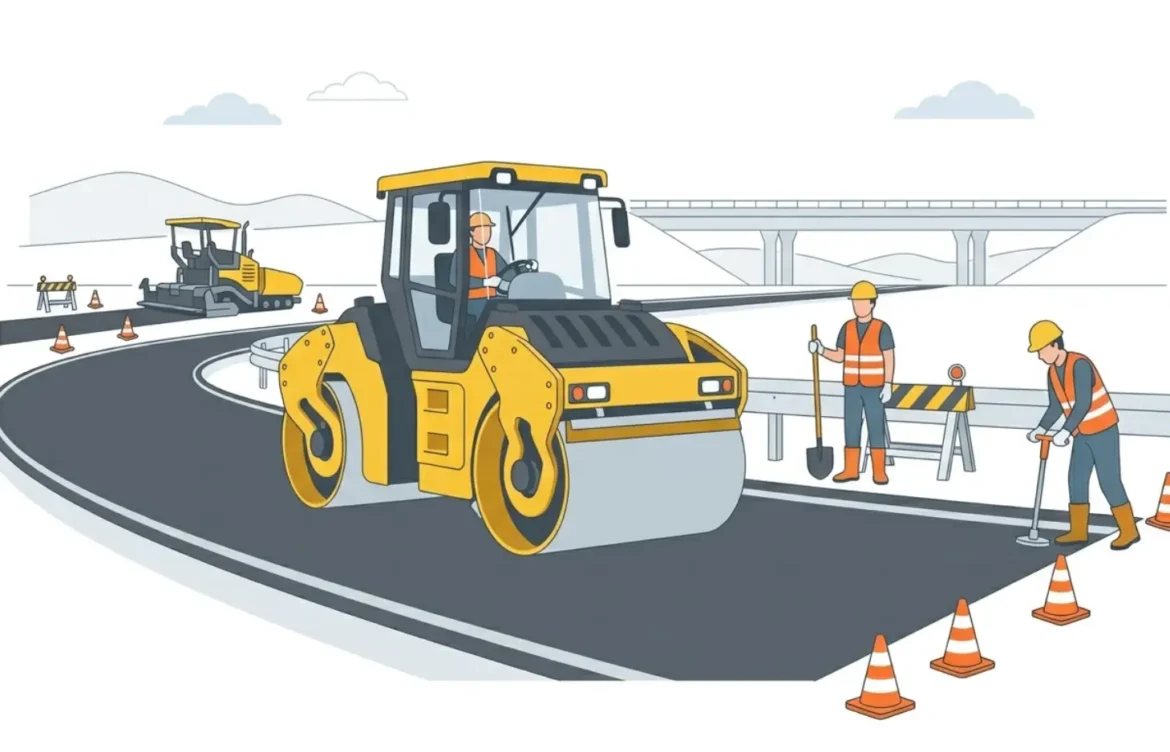
Applications of Road Rollers in Highway Construction
Essential Road Roller Uses: How to Build Perfect Highways Faster
Highway construction forms the backbone of a nation’s economic growth, safety, and connectivity. Every mile of road laid is a testament to careful engineering and a standard of quality that leaves no room for compromise. At the heart of this process lies the essential task of compaction—transforming raw earth and loose materials into a solid, stable foundation capable of supporting the immense stresses of modern transportation. Achieving the required density and uniformity of each highway layer is not only critical for immediate load-bearing needs but also for the long-term resilience of the roadway against weather, traffic, and natural settling.
Road rollers are the key machines that make this foundation possible. Their roles extend far beyond simply flattening the ground. Through precise application of weight and, in many cases, vibration or kneading force, road rollers ensure that every layer—whether it’s subgrade soil, sub-base aggregates, or hot asphalt—is compacted to exact engineering standards. This rigorous process dramatically reduces the risk of settlement, surface cracking, and water infiltration, each of which can compromise a road’s safety and lifespan. Without the reliable performance of specialized road rollers, construction crews would face undue challenges in delivering highways that stand up to decades of daily use and adverse conditions.
When it comes to productivity and project timelines, road rollers also play a pivotal role. The speed and efficiency with which a roller can bring material to specification have a direct impact on the schedule and cost-effectiveness of the entire highway project. Their advanced features and adaptability significantly reduce rework, keep paving operations on track, and help contractors meet critical deadlines safely and reliably.
In short, road rollers are indispensable to the highway construction process. Their correct use is fundamental to building infrastructure that supports the flow of commerce, keeps communities connected, and upholds the highest standards of public safety.
Road rollers serve as the backbone of any successful paving operation. These massive machines do much more than just flatten dirt. They engineer the soil, bind asphalt layers, and deliver the smooth, safe driving surfaces that communities rely on every day. Understanding how to deploy the right roller at the right time ensures your projects meet strict engineering standards and stand the test of time.
This guide explores the diverse applications of road rollers in highway construction. We will break down their vital roles in soil compaction, asphalt layering, and surface finishing. You will also learn about the specific types of road rollers available and exactly how they benefit your large-scale infrastructure projects.
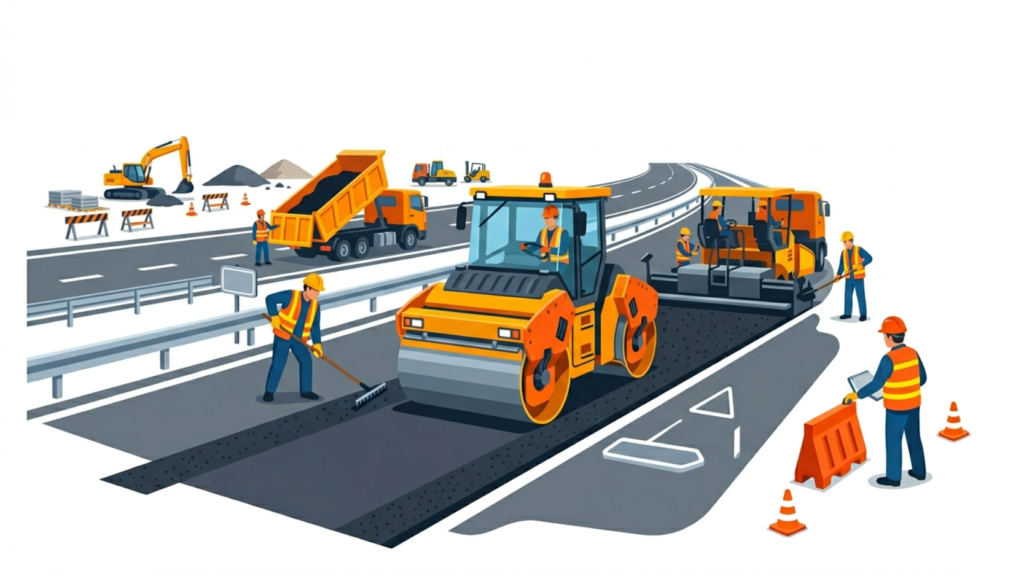
The Critical Role of Compaction in Highway Projects
Before pouring a single ton of asphalt, highway crews must prepare the earth beneath it. Compaction represents the most important phase of this preparation, as it lays the groundwork for the entire highway structure. The process begins by systematically reducing the air voids within the soil and sub-base materials—this is achieved by applying repeated force and, when necessary, vibration to create a stable, tightly packed mass. Road rollers press soil particles tightly together, forcing out trapped air and water. This step is critical because excess moisture or air pockets left untreated can lead to instability, settling, and a host of structural weaknesses after construction is complete.
Effective compaction directly determines the ability of the road to withstand the continuous dynamic loads imposed by heavy vehicles and fluctuating temperatures. With proper compaction, the granular base and sub-base materials lock together, forming a supportive matrix that resists deformation under traffic. This not only helps prevent immediate failures such as rutting or potholes but also mitigates long-term issues like freeze-thaw damage and water infiltration. Modern compaction equipment allows for precise control over rolling patterns, applied pressure, and vibratory intensity, enabling engineers to meet rigorous specifications for density and uniformity across every section of the roadway. Given the expense and public impact of highway projects, meticulous attention to compaction assures the safest, most reliable, and cost-efficient results possible.
Ensuring Long-Term Durability
Uncompacted soil shifts naturally over time. If you build a road on loose earth, the ground will settle unevenly under the constant stress of commercial trucks and daily commuters. This uneven settling causes deep structural damage, leading to massive potholes, alligator cracking, and premature highway failure.
Proper compaction with industrial road rollers prevents this shifting. By maximizing the density of the soil and sub-base materials, rollers create a rigid, unyielding foundation. This dense base easily supports heavy traffic loads and resists water penetration. When you prioritize thorough compaction, you drastically reduce future maintenance costs and extend the lifespan of the highway by decades.
Enhancing Driver Safety
Highway safety begins from the ground up. A smooth, well-compacted road surface provides vehicles with maximum tire traction. This traction proves critical during harsh weather conditions, preventing dangerous hydroplaning and allowing drivers to stop safely.
Furthermore, poor compaction leads to rutting. Ruts are deep depressions that form in the wheel paths of highway lanes. These ruts collect rainwater and forcefully pull vehicles out of their lanes, leading to severe accidents. By utilizing the correct road rollers during every phase of construction, you eliminate rutting and guarantee a safer journey for the public.
Core Applications of Road Rollers
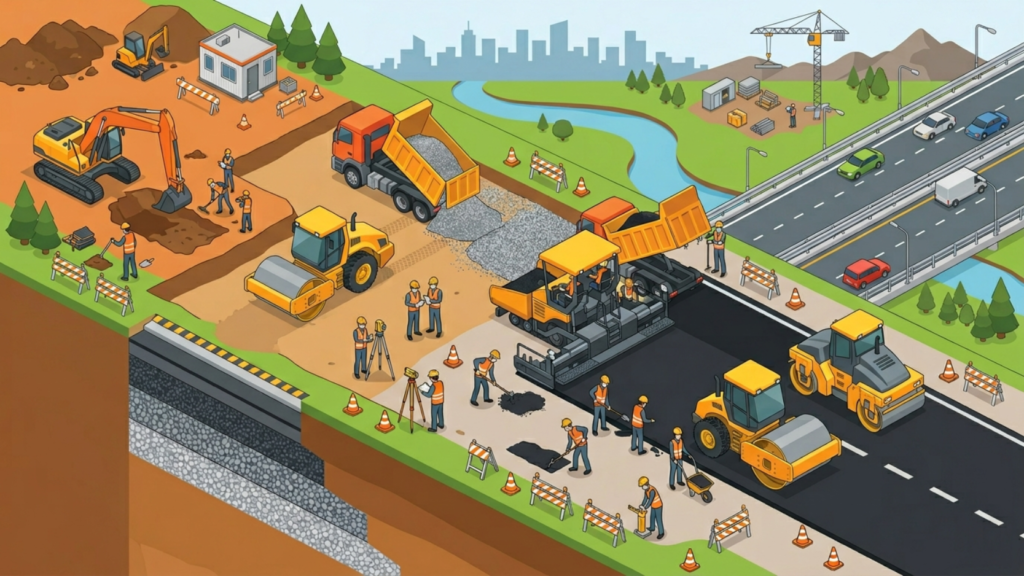
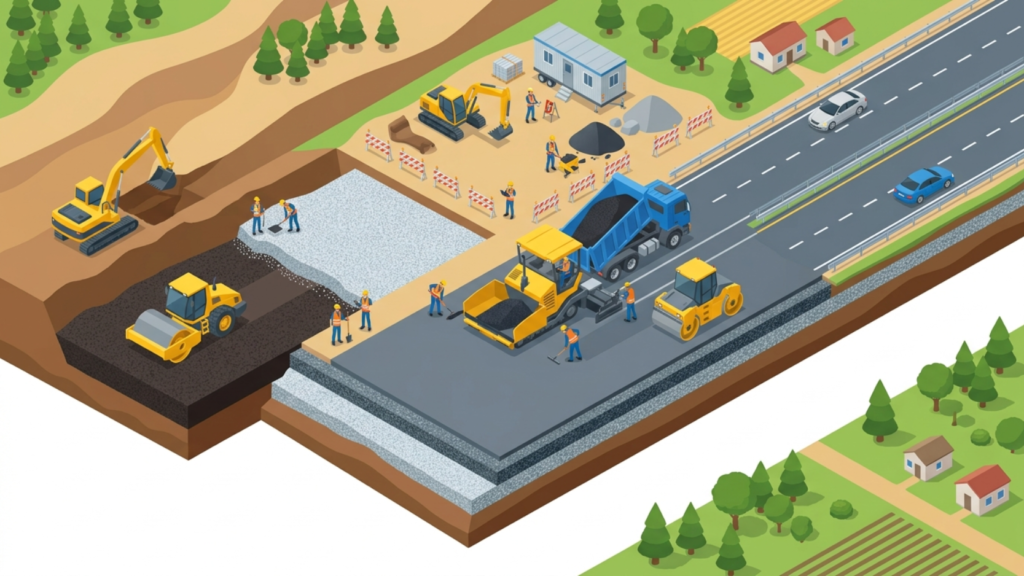
Highway construction happens in distinct, highly controlled layers, and the proper use of road rollers in each of these stages is critical to ensuring the finished highway is durable, safe, and cost-effective to maintain. The core applications of road rollers in this process extend well beyond initial compaction—they span from earthwork preparation, through sub-base and base compaction, to the final surface finish. Let’s take a closer look at how each of these applications contributes to project success and long-term performance:
- Earthwork and Initial Ground Preparation: As soon as excavation and grading are complete, road rollers are brought in to compact the natural subgrade. This step stabilizes the underlying soil, uniformizes its properties, and greatly reduces settlements that might otherwise occur long after the road opens. Uniform compaction at this early stage is fundamental for minimizing surface deformation and avoiding premature road failures.
- Sub-Base and Base Layer Compaction: After preparing the subgrade, construction crews lay down a sub-base (often of gravel or crushed stone) and in some designs, a further base course. Each of these layers must be compacted thoroughly to meet engineered density standards. Proper compaction eliminates weak spots, improves load distribution, and creates a strong platform for subsequent asphalt placement. Inadequate compaction at this stage can result in localized failures, increased rutting, and extensive costly repairs.
- Asphalt Layering and Breakdown Rolling: A primary application of road rollers is in compacting freshly-laid asphalt while it is still hot. Multiple passes—sometimes with different roller types—are required to pack the aggregate tightly, remove air voids, and ensure the binder adequately coats every granular particle. Timely compaction assures strong adhesion between asphalt layers, locks in structural integrity, and prevents water infiltration, which could trigger potholes or stripping.
- Intermediate and Finish Rolling: Once the initial breakdown rolling is complete, intermediate rolling further consolidates the asphalt and begins smoothing the surface. The final finishing pass, typically with smooth drum rollers, delivers the uniform, sealed, skid-resistant surface that’s critical for driver safety and comfort. This progression of rolling activities is aligned with best industry practices and DOT requirements, providing peace of mind for public agencies and contractors alike.
- Specialized Compaction Tasks: Beyond large, open highway stretches, road rollers are also indispensable for shoulder compaction, embankment stability, and work in challenging terrains such as inclines or curves. Advanced rollers equipped with intelligent compaction technologies can measure and adjust effort in real time, ensuring that even complex geometric sections of modern highways are built to the highest standard.
By using the optimal road roller at every stage—from subgrade preparation to final asphalt finishing—contractors can reliably achieve specifications that prevent premature failure, reduce long-term maintenance expenses, and deliver maximum value to stakeholders. This targeted, application-specific approach is the backbone of quality highway construction.
Soil and Sub-Base Compaction
The foundation of any highway consists of the native soil, known as the subgrade, topped with a sub-base layer of crushed stone or gravel. Road rollers must compact both of these layers before paving begins.
Heavy-duty rollers crush the aggregate materials together, interlocking the jagged edges of the stones. This interlocking action creates a powerful load-bearing structure. For deep soil compaction, operators use heavy machinery equipped with high-amplitude vibration. The intense vibrations penetrate deep into the earth, rearranging the soil particles into their tightest possible configuration.
Asphalt Layering and Compaction
Once the foundation is secure, paving crews apply the asphalt. Highway construction typically involves multiple layers of asphalt, including a binder course and a final surface course. Hot mix asphalt contains liquid bitumen, sand, and crushed stone.
While the asphalt is still hot, road rollers must compress it quickly. The heavy steel drums of the roller squeeze the aggregate materials together while the liquid bitumen acts as a glue. This process, known as breakdown rolling, achieves the target density required by state transportation departments. If the asphalt cools before the roller achieves proper compaction, the pavement will remain porous, brittle, and highly susceptible to water damage.
Final Surface Finishing
After achieving the required density, the highway needs a smooth, polished finish. The final pass of a road roller removes any marks, ridges, or imperfections left behind during the initial breakdown rolling.
Operators carefully control the speed and direction of their finishing rollers to iron out the asphalt. This meticulous finishing work seals the surface against moisture and provides the quiet, seamless ride that drivers expect from a brand-new highway. We know that the final finish is the only part of your work the public actually sees, making this step absolutely crucial for your company’s reputation.
Types of Road Rollers and Their Specific Uses
No single road roller is designed to handle every phase of a highway construction project. Manufacturers produce a range of specialized rollers, each engineered to address specific material types, compaction requirements, and operational challenges encountered during highway builds. Selecting the right roller is essential for optimal efficiency, superior compaction results, and long-term pavement durability.
- Vibratory Rollers: These are among the most versatile and widely used rollers in highway construction. Equipped with heavy steel drums and internal vibratory mechanisms, vibratory rollers deliver powerful vertical impacts that penetrate deep into earthwork and aggregate layers. They excel at compacting granular soils, crushed rock, and hot mix asphalt. Their adjustable frequency and amplitude settings allow precise control for varying material thicknesses and densities. For deep base and binder courses, vibratory rollers ensure rapid achievement of required densities, minimize voids, and facilitate long-term load distribution. Their effectiveness reduces the number of passes needed, saving both time and operational costs.
- Pneumatic Tyred Rollers: These rollers feature multiple rows of heavy-duty rubber tires rather than steel drums, offering unique compaction capabilities. By adjusting tire pressure and ballast weight, pneumatic rollers can deliver tailored compactive effort across a broad range of materials. They are particularly effective for intermediate asphalt compaction, where their kneading action helps achieve a tight seal and pushes bitumen to the surface, enhancing water resistance and durability. Pneumatic rollers are also used to blend aggregates and compact granular materials in base layers where uniformity is critical.
- Smooth Wheeled (Static) Rollers: Otherwise known as tandem or three-wheel rollers, these machines use solid, smooth steel drums to apply static pressure. They are primarily employed in the final finishing phase of asphalt paving. Their main purpose is to remove minor imperfections, eliminate roller marks from previous compaction passes, and deliver a smooth, reflective surface. Because they do not vibrate, smooth wheeled rollers are particularly suitable for the last stages when excessive vibration could damage the structure of the asphalt mix or cause segregation of materials.
- Sheepsfoot (Padfoot) Rollers: Easily recognized by their steel drums covered in projecting lugs or “feet,” sheepsfoot rollers are designed to compact cohesive soils such as clay, silt, and fine-grained embankment materials. The projecting feet penetrate deep into wet, loose layers, exerting high localized pressure to knead and consolidate the material from the bottom up. This unique action expels air and moisture, increasing soil strength and preventing later settlement. Sheepsfoot rollers are not suitable for granular soils or finished asphalt surfaces but are vital for early earthwork and embankment compaction tasks.
- Grid Rollers: Used mainly for coarse soil and sub-base applications, grid rollers consist of a cylindrical steel drum with a network of steel bars forming a grid pattern. These rollers are highly effective on well-graded coarse materials as they create a crushing and kneading action to break large aggregates down while maintaining the required gradation. They are commonly employed in the preparation of sub-base layers where standard smooth drum rollers may not be sufficient to achieve compaction.
- Double-Drum (Tandem) Rollers: Featuring two steel drums—one at the front and one at the rear—these rollers provide balanced compaction forces for both soil and asphalt surfaces. Their design allows for efficient, uniform rolling and helps minimize surface defects, making them suitable for finish passes as well as some intermediate compaction needs on medium-thickness asphalt lifts.
By thoroughly understanding these various roller types and their optimal applications, contractors can match each roller to the right layer or material, resulting in consistently high-quality compaction, superior durability, compliance with regulatory standards, and ultimately, safer highways for years to come.
Vibratory Rollers
Vibratory rollers represent the most common and versatile machines on a modern highway project. These rollers feature heavy steel drums equipped with internal rotating eccentric weights. As the drum rolls, the weights generate powerful vertical vibrations that pound the ground.
These intense vibrations make vibratory rollers perfect for compacting deep layers of crushed rock, gravel, and dense soils. They are also essential for the breakdown rolling of hot mix asphalt. The vibration forces the asphalt aggregates to nest closely together, achieving strict density requirements in fewer passes. This efficiency saves your crew valuable time and fuel.
Pneumatic Tyred Rollers
Unlike steel drum rollers, pneumatic tyred rollers use rows of heavy-duty rubber tires positioned on both the front and rear axles. The tires stagger, ensuring they cover the entire width of the machine’s path. Operators can adjust the tire pressure to change the compaction force based on the material.
Pneumatic rollers excel at kneading asphalt. The rubber tires manipulate the hot mix, sealing the surface and pushing the bitumen to the top. This kneading action closes tiny surface cracks and creates an incredibly watertight finish. Crews heavily rely on pneumatic rollers for intermediate compaction, bridging the gap between the initial breakdown and the final finish.
Smooth Wheeled Rollers
Also known as static rollers, smooth wheeled rollers feature large, heavy steel drums without any vibrating mechanisms. They rely entirely on their immense static weight to press materials into place. You will typically see these machines configured with tandem drums, meaning they have a steel roller in the front and the back.
Smooth wheeled rollers are the premier choice for final surface finishing. Because they do not vibrate, they will not damage or fracture the asphalt aggregates as the mixture cools. Operators use static rollers to iron out the tire marks left by pneumatic rollers, leaving behind a flawless, glass-like highway surface.
Sheepsfoot Rollers
Sheepsfoot rollers look drastically different from standard paving equipment. Instead of a smooth steel drum, their rolling cylinders feature dozens of heavy, projecting metal studs or “feet.”
Crews use sheepsfoot rollers exclusively for compacting cohesive soils, such as heavy clay and silt, deep within the highway foundation. The metal feet penetrate deep into the wet soil, kneading it and forcing out trapped moisture. As the roller makes multiple passes, the soil gradually compacts from the bottom up until the roller “walks out” on top of the hardened earth. You cannot use sheepsfoot rollers on asphalt or granular soils like sand.
Choosing the Right Roller for Your Highway Project
Selecting the correct fleet of road rollers directly impacts your project’s profitability, timeline, and long-term performance. Effective roller selection is a strategic process that requires careful assessment of site conditions, engineering requirements, and operational goals. Begin by evaluating the specific soil characteristics present at your job site—cohesive clays, silts, gravels, and rock sub-bases each respond best to certain types of compaction equipment. For instance, cohesive clay layers demand sheepsfoot or padfoot rollers to achieve deep, uniform consolidation, while rocky or granular sub-bases require the decisive force and vibration of heavy vibratory rollers.
Analyze the planned thickness and material composition of each lift, as heavier vibratory units with adjustable amplitude may be needed for thicker or denser lifts to ensure compaction targets are met throughout the entire layer. Moisture content is another critical consideration; some rollers are equipped with moisture measurement or intelligent compaction systems that allow real-time adjustments, reducing the risk of under- or over-compaction. Take stock of any specialized requirements for project segments such as embankments, shoulders, or areas with steep grades—these often benefit from compactors with advanced traction or adaptive weight distribution.
Logistical factors should not be overlooked: consider access points, site congestion, and the availability of staging areas that could affect roller maneuverability and productivity. Assessing the expected production rates and matching roller capacity to project scale helps avoid bottlenecks and keeps your paving schedule on track.
Finally, always align roller selection with relevant Department of Transportation (DOT) specifications and quality assurance protocols. Consult with your equipment partner to verify that your fleet meets the latest industry standards for emissions, safety, and technological integration. A collaborative approach with knowledgeable suppliers ensures you secure durable, fit-for-purpose rollers ready to deliver consistent, high-quality results, project after project.
You must also consider the thickness of your asphalt lifts. Thicker layers require heavier vibratory rollers with high amplitude settings to achieve proper density. Partnering with a trusted equipment provider ensures you always have the exact machinery needed to meet strict Department of Transportation specifications. We pride ourselves on delivering the reliable, high-performance rollers that keep your highway projects moving forward.
Build Highways That Last
Road rollers do much more than just press down dirt and asphalt. They engineer the very foundation of our transportation infrastructure. By utilizing the correct rollers for soil compaction, asphalt layering, and surface finishing, you guarantee your highway projects deliver unmatched safety and longevity.
We encourage you to audit your current heavy equipment fleet. Ensure your team has access to the latest vibratory and pneumatic roller technology to maximize their daily productivity. If you need assistance selecting the perfect compaction equipment for your next major highway contract, reach out to our team of heavy machinery experts today. We are ready to help you build better, safer roads for the future.