 Trending

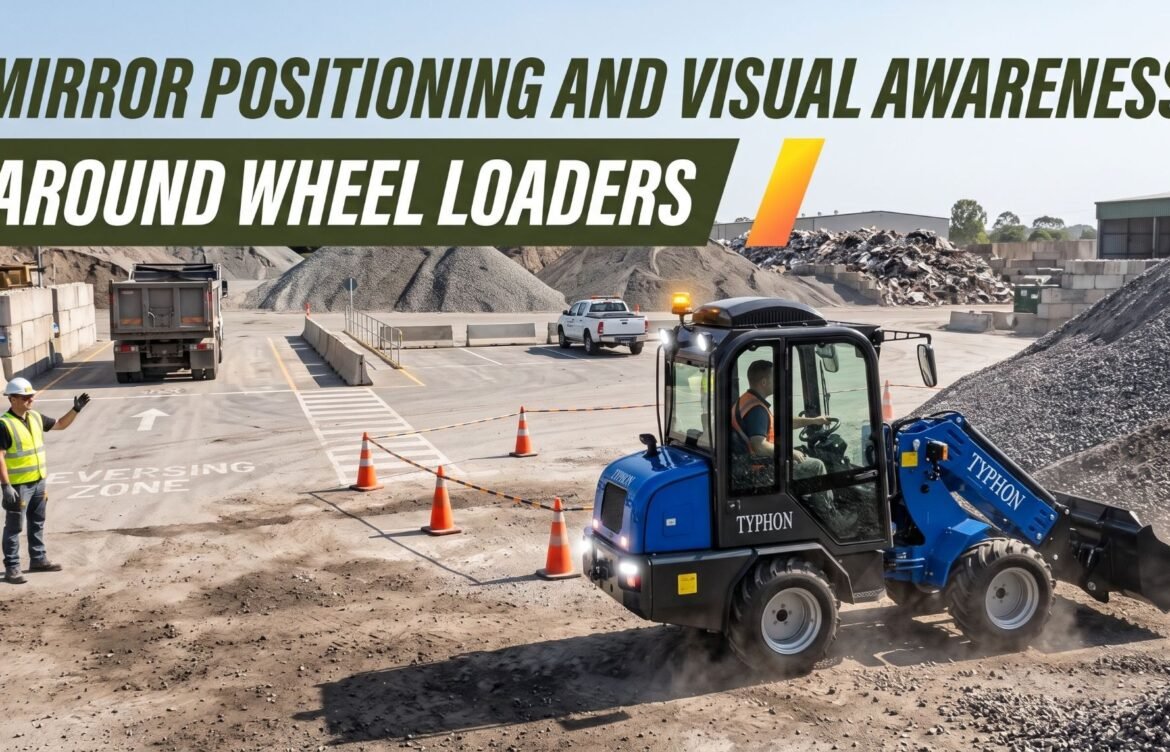
Mirror Positioning and Visual Awareness Around Wheel Loaders
Wheel loaders work in busy places. Stockpiles, truck loading lanes, recycling yards, construction sites, and material handling facilities all bring workers, haul trucks, service vehicles, and fixed structures close to the machine. During a single loading cycle, the operator drives forward into a pile, reverses out, turns toward a truck, raises the bucket, and reverses again. Each movement changes what the operator can and can’t see. Around the machine, visibility is never fixed. It shifts with every turn, lift, and change of direction.
Mirrors are among the most important tools an operator has for monitoring areas that the cab windows don’t show directly. A correctly adjusted mirror can reveal a pedestrian near a rear wheel, a light vehicle parked behind the counterweight, or a truck closer than expected. Proper engine horsepower also supports the loader’s ability to maintain consistent performance during demanding operations, but engine power does not replace the need for good visibility and safe maneuvering. A mirror only helps when it is aimed properly from the operator’s seat, kept clean, and mounted securely. A mirror that has been knocked out of position, coated in dust, or loosened by vibration can give a false picture of the area behind the machine.
Mirrors also have limits. Cab pillars, lift arms, the bucket, engine covers, and the size of the machine create blind spots that no single mirror can cover. That’s why strong visual awareness combines several tools and habits: mirrors, direct observation, cameras, proximity alerts, alarms, walk-around inspections, and clear communication with ground personnel.
Adjusting Mirrors From the Normal Driving Position
Mirror adjustment only works when it matches the operator’s actual eye position. A mirror set from the ground, from the cab steps, or by a different operator may look correct but miss critical areas once the machine is moving.
Each mirror on a wheel loader typically serves a specific purpose. Rear-facing mirrors show the area behind and along the sides of the machine. Some machines also have mirrors positioned to show areas close to the rear wheels or the front corners. Know what each mirror is meant to cover on your machine. Check the operator’s manual or ask the dealer if you’re unsure.
When adjusting rear mirrors, aim for a view that includes a small portion of the machine’s side or rear structure. That reference point helps you judge position and distance. Avoid aiming mirrors so high that they show mostly sky, or so low that they show only the tires.
Many mirrors on wheel loaders are mounted on the cab exterior or on brackets that can’t be reached safely from the seat. Never stand on tires, fenders, the bucket, or the lift arms to reach a mirror. Use the machine’s approved access points, keep three points of contact, and follow the manufacturer’s guidance. Where an adjustment requires a second person, one person sits in the seat and directs while the other makes the change from a safe, stable position with the machine shut down and secured. Remote-adjustable mirrors, where fitted, make this process easier.
Key takeaway: Set up the seat, belt, and controls first, then adjust each mirror from the normal operating position, and recheck the adjustment whenever the operator, seat position, or mirror condition changes.
Understanding Mirror Coverage and Blind Spots
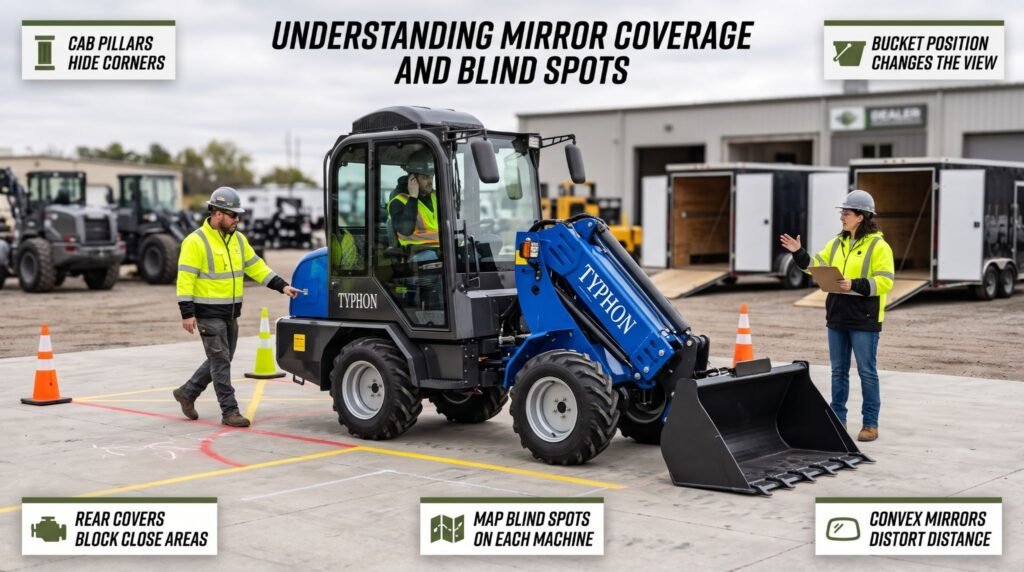
No mirror arrangement shows every area around a wheel loader. The machine’s size and structure create zones that the operator can’t see directly or through the mirrors. Knowing where those zones are is just as important as knowing what the mirrors do show.
Common sources of blind spots include:
- Cab pillars: Door frames and structural pillars can hide a person standing at a front or rear corner of the machine.
- Lift arms and bucket: A raised bucket can block the forward view, while a lowered, heaped bucket can hide the area directly in front of the machine.
- Engine compartment and rear covers: On many loaders, the rear bodywork blocks a large area close behind the machine.
- Wheels and fenders: Tires and fenders hide areas close to the machine’s sides, particularly near the rear wheels.
- Machine height and length: The higher the operator sits, the harder it becomes to see low objects and people close to the machine.
Mirror type also affects what the operator sees. Flat mirrors show objects at their true size and distance but cover a narrower area. Convex mirrors cover a wider area but make objects appear smaller and farther away than they actually are. Operators should understand which type is fitted on their machine and judge distance carefully when using convex mirrors.
The most practical way to understand blind spots is to map them on your own machine. With the loader parked on level ground, the bucket lowered, the parking brake applied, and the engine off, have a coworker walk slowly around the machine at different distances while the operator watches from the seat. Note where the person disappears from direct view and from every mirror. Repeat the exercise with the bucket in common working positions, since the view changes as the attachment moves. Some manufacturers provide visibility information based on recognized earthmoving visibility standards, which can help explain the machine’s sightlines.
Share what you learn with the crew. Ground personnel who understand where the operator can’t see are far more likely to stay out of those zones.
Key takeaway: Cab pillars, lift arms, the bucket, engine covers, wheels, and machine size create blind spots that mirrors can’t eliminate, so map those zones on each machine and never assume an area is clear because it doesn’t appear in a mirror.
Keeping Mirror Surfaces Clear and Secure
A mirror is only as useful as its condition allows. Wheel loaders work in dust, mud, rain, and constant vibration, and all of these reduce mirror performance over the course of a shift.
Conditions change during the day, so cleaning once in the morning may not be enough. In dusty yards or wet weather, stop and clean mirrors whenever visibility drops. Always park the machine, lower the bucket to the ground, apply the parking brake, and shut down according to site procedures before leaving the cab or reaching mirrors. Use approved access points and maintain three points of contact.
Some machines include heated mirrors, which help clear frost, condensation, and light rain. Confirm they work during cold or wet seasons.
Replace cracked, distorted, or badly damaged mirrors before operating. Use replacement parts that provide the same field of view as the original equipment, and confirm the replacement suits the machine configuration. A mirror that is the wrong size, shape, or type can reduce coverage even when it looks similar.
Key takeaway: Clean mirrors regularly, inspect glass, brackets, and joints during every pre-operation check, and replace damaged mirrors with suitable parts before the machine returns to work.
Using Mirrors During Reversing and Turning
Reversing is one of the highest-risk movements a wheel loader makes. In a typical loading cycle, the machine reverses out of the pile and then turns toward the truck, often several times every few minutes. Repetition can lead to rushed checks, which is exactly when hazards are most likely to be missed.
Continue scanning while the machine moves. A single glance before starting doesn’t account for a person or vehicle that enters the path a few seconds later. Shift your attention between mirrors, the camera, and direct views throughout the movement.
Turning requires particular care on articulated wheel loaders. When the machine steers, the front and rear frames pivot around the center hinge. The rear of the machine swings out and follows a different path from the front. A loader turning away from an obstacle can still swing its rear frame into that obstacle or into a person standing nearby.
Follow the site’s traffic management plan, including one-way routes, designated reversing areas, and exclusion zones. When a spotter is used, agree on hand signals before work begins, keep the spotter in view at all times, and stop immediately if you lose sight of them or receive an unclear signal. Never reverse when you can’t confirm that the path is clear.
Key takeaway: Check all mirrors, direct views, and cameras before and during every reversing movement, watch the rear frame swing during articulated turns, keep speeds low, and stop whenever the path or the spotter can’t be confirmed.
Combining Mirrors With Cameras and Other Safety Aids
Modern wheel loaders often include additional visibility and awareness aids. These tools give operators more information about the area around the machine, but each has limitations. They work best as part of a layered system, not as a replacement for mirrors or operator checks.
Common safety aids include:
- Rear-view cameras: Show the area behind the machine on a cab display, often covering zones hidden by the engine compartment.
- Side or multi-camera systems: Some machines offer additional cameras or combined views that provide wider coverage around the machine.
- Proximity detection systems: Radar or other sensors can alert the operator when an object or person is detected within a set distance.
- Reversing alarms: Audible or broadband alarms warn people nearby that the machine is backing up.
- Lights and beacons: Work lights, reversing lights, and rotating or strobe beacons improve visibility for both the operator and ground workers.
Check every aid before starting work. Clean camera lenses, confirm the display shows a clear image, test that alarms sound, and verify that proximity alerts respond where fitted. Adjust display brightness for the conditions. Report any failed system before operating, and follow site rules on whether the machine can be used while a safety device is out of service.
Treat alerts as a prompt to look, not as confirmation that an area is clear. When an alert sounds, stop or slow down and check directly before continuing. When no alert sounds, keep scanning anyway.
Key takeaway: Cameras, proximity alerts, alarms, and lights add valuable information, but they have limits, so check them before every shift, keep lenses clean, and use them alongside mirrors and direct observation rather than in place of them.
Building a Consistent Visual Check Routine
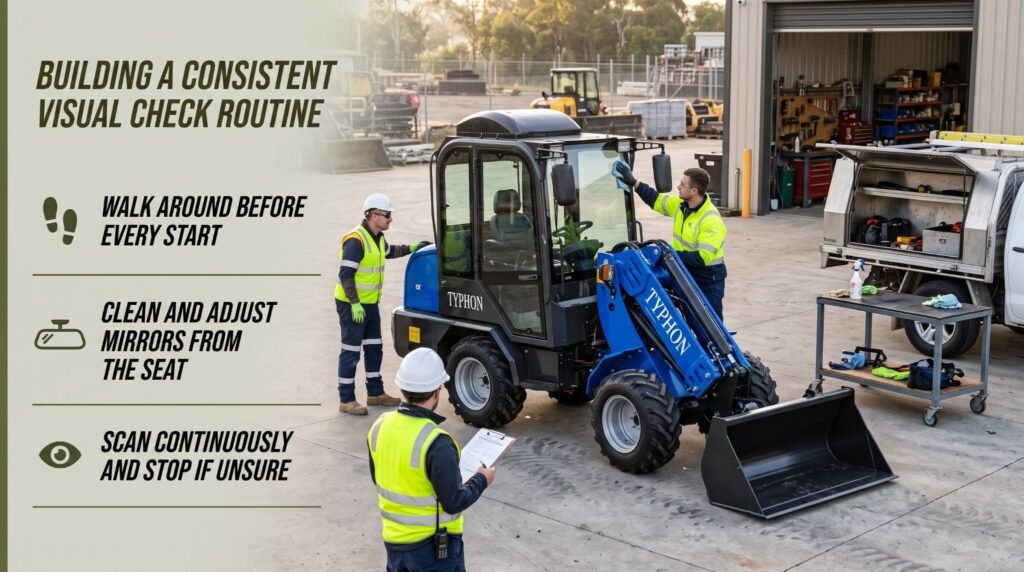
Visual awareness depends on habits as much as equipment. Operators who follow the same routine every shift are far less likely to miss a hazard when the job gets busy or the day gets long.
A dependable routine includes three stages:
Before starting the machine
- Walk completely around the loader and check for people, vehicles, materials, and obstacles nearby.
- Inspect mirrors, camera lenses, lights, and visible safety equipment.
- Note the location of ground personnel, parked vehicles, and fixed structures.
- Confirm site traffic routes, exclusion zones, and spotter arrangements.
Before moving
- Adjust the seat, fasten the seat belt, and set mirrors from the operating position.
- Test cameras, displays, alarms, and proximity alerts where fitted.
- Check all mirrors and direct views, then sound the horn where site procedures require it.
During operation
- Scan mirrors, cameras, and direct views continuously, not only when changing direction.
- Recheck the area when approaching loading points, trucks, stockpiles, and discharge areas.
- Watch for changes on site, such as new vehicles, workers, or materials entering the area.
- Stop whenever visibility is lost, an unexpected person appears, or communication breaks down.
Communication with ground personnel completes the routine. Workers should make eye contact with the operator before approaching a loader and should wait for a clear acknowledgment before entering the work area. Radios or agreed hand signals help maintain contact on busy sites.
Training reinforces these habits. Operators should be trained on the specific loader model, its blind spots, its mirror and camera arrangement, and site traffic rules. Include mirror condition and adjustment in daily pre-operation checklists so the routine becomes a recorded part of every shift.
Key takeaway: A consistent routine of walk-around checks, mirror and camera setup, continuous scanning, and clear communication with ground personnel keeps visual awareness strong throughout the shift.
Conclusion
Correct mirror positioning gives wheel loader operators a reliable view of areas the cab windows can’t show, but mirrors deliver their full value only as part of a complete visual awareness system. That system starts with adjusting every mirror from the normal operating position and rechecking it whenever the operator or seat changes. It depends on understanding the blind spots created by cab pillars, lift arms, the bucket, engine covers, wheels, and machine size, and on keeping mirror glass clean and mountings secure. During reversing and turning, operators should scan all mirrors, direct views, and cameras continuously, watch the rear frame swing on articulated machines, and stop whenever the path can’t be confirmed. Cameras, proximity alerts, and alarms strengthen awareness when they’re checked and understood, yet they never replace direct observation. Before your next shift, walk around the loader, clean and adjust every mirror from the seat, test your camera and alert systems, map the machine’s blind spots with your crew, and make these checks part of a routine that protects everyone working near the machine.
Frequently Asked Questions
When should wheel loader mirrors be adjusted?
Adjust mirrors before starting work, from the normal operating position with the seat set up and the seat belt fastened. Recheck them whenever a different operator takes over, the seat position changes, or a mirror has been bumped, cleaned, repaired, or affected by transport or service. Never adjust mirrors while the machine is moving. Where mirrors can’t be reached safely from the seat, shut down and secure the machine, use approved access points, and have a second person help with adjustment.
Do mirrors eliminate wheel loader blind spots?
No. Mirrors reduce blind spots, but they can’t eliminate them. Cab pillars, lift arms, the bucket, engine covers, wheels, and the machine’s size create areas that the operator can’t see directly or through any mirror. Convex mirrors also make objects appear smaller and farther away. Operators should map the blind spots on each machine, complete a walk-around before starting, and never assume an area is clear simply because nothing appears in a mirror.
Can a rear camera replace mirrors?
No. A rear camera is a supplementary visibility aid that often shows areas hidden behind the engine compartment, but it has its own limits. Dust, mud, glare, and low light can reduce image quality, and cameras may not cover every angle or areas very close to the machine. Use cameras together with mirrors, direct observation, alarms, and site communication. Clean the lens and confirm the display works before every shift.
What should operators do if a mirror is damaged or loose?
Report it and have it repaired or replaced before operating the machine. A cracked, distorted, or loose mirror can give a false or unstable picture of the area around the loader. Replacement mirrors should provide the same field of view as the original equipment and suit the machine configuration. Include mirror glass, brackets, joints, and housings in daily pre-operation checks so damage is caught early.