 Trending
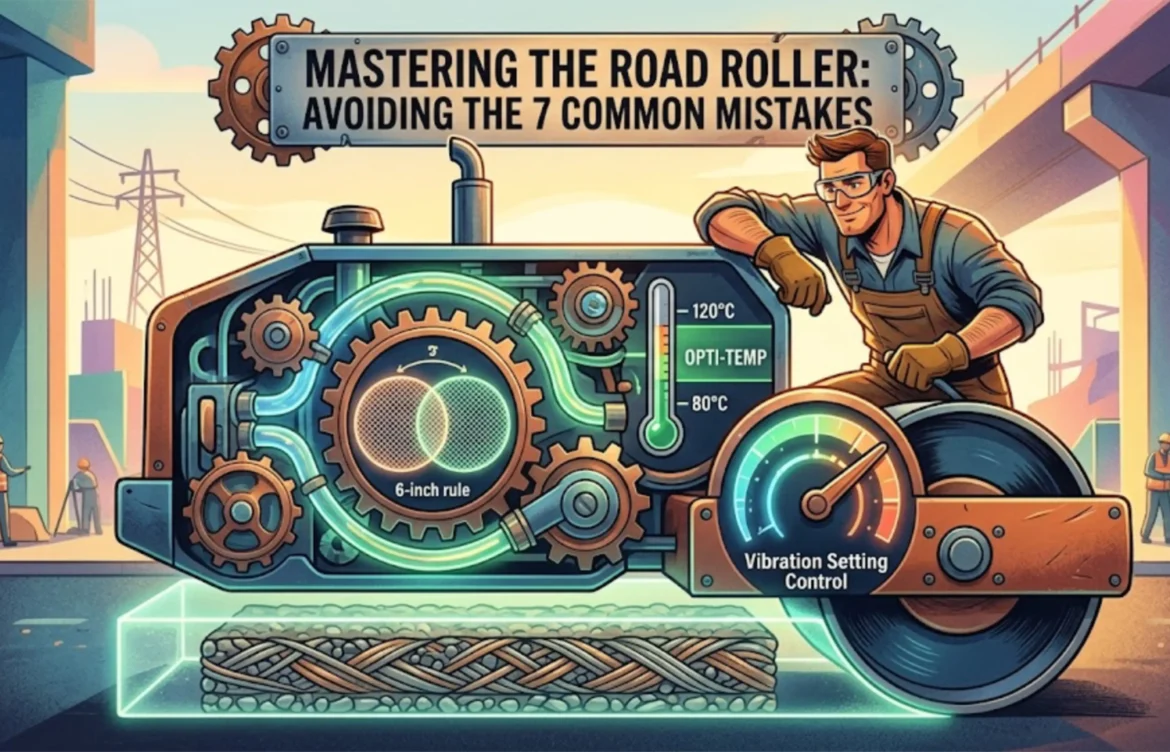
7 Common Mistakes When Using a Road Roller (And How to Avoid Them)
Whether you’re paving a residential driveway or a major highway, the road roller is the “closer” of the construction world. It’s the machine that turns a loose pile of aggregate or hot asphalt into a smooth, durable surface.
However, because rolling seems straightforward—driving back and forth—it is often where the most expensive mistakes happen. One wrong move can lead to “shoving,” cracks, or a surface that fails within a year.
To help you get that flawless finish, here are the seven most common mistakes when using a road roller and the professional strategies to avoid them.
1. Rolling at Excessive Speeds
It’s tempting to floor it when you’re behind schedule, but speed is the enemy of density. When a roller moves too fast, the drum doesn’t have enough “dwell time” to rearrange the particles and compress the material effectively.
-
The Problem: High speeds cause the drum to “bounce” or skip, leading to an uneven, corrugated surface known as “washboarding.”
-
The Fix: Maintain a consistent, slow pace. For soil or aggregate, keep it between 3–6 km/h. For asphalt, stay closer to a walking pace (4 km/h) to ensure uniform compaction without displacing the mix.
2. Incorrect Vibration Settings
Vibration is a tool, not a default setting. Using the wrong amplitude (the height of the drum’s movement) or frequency (how fast it vibrates) can ruin a job.
-
The Problem: Using high amplitude on thin layers of asphalt can crush the aggregate or damage the underlying base. Conversely, no vibration on thick lifts leads to poor density at the bottom of the layer.
-
The Fix: Match your settings to the material depth.
-
Thick lifts: High amplitude, lower frequency.
-
Thin lifts: Low amplitude, higher frequency.
-
Final pass: Always turn vibration OFF for the “static” finishing pass to remove drum marks.
-
3. Poor Overlap Technique
Compaction isn’t just about covering the ground; it’s about how you transition between passes.
-
The Problem: If you don’t overlap your previous path, you’ll leave “uncompacted strips” or ridges between passes. This creates weak points where water can seep in, leading to potholes later.
-
The Fix: Follow the 6-inch rule. Ensure each new pass overlaps the previous one by at least 15 cm (6 inches). When rolling a longitudinal joint (where two lanes meet), overlap the cold lane by about 5–10 cm to “pinch” the joint shut.
4. Ignoring Asphalt Temperature
When working with Hot Mix Asphalt (HMA), timing is everything. There is a specific “window of workability” that you cannot ignore.
-
The Problem: Rolling when the asphalt is too hot causes “shoving” (the mix moves like a wave in front of the drum). Rolling when it’s too cold (usually below 80°C) is useless; the bitumen has hardened, and you won’t achieve the required density.
-
The Fix: Use an infrared thermometer.
-
Breakdown rolling: Start as soon as the mix can support the roller without excessive displacement (usually 120°C–140°C).
-
Finish rolling: Complete all passes before the mix drops below the cessation temperature.
-
5. Sudden Starts, Stops, and Turns
A road roller is a heavy-duty instrument, not a sports car. Jerky movements are a recipe for disaster on fresh surfaces.
-
The Problem: Stopping abruptly or turning the steering wheel while the roller is stationary creates deep indents and “scuffing” in the material. These marks are incredibly difficult to roll out later.
-
The Fix: Always be in motion when turning the drum. When you reach the end of a pass, don’t stop in a straight line. Instead, angle the roller slightly (a “blunt” turn) before reversing. This spreads the weight and prevents a “dent” from forming at the reversal point.

6. Neglecting the Water Spray System
The water system isn’t just for cleaning the drum; it’s a release agent.
-
The Problem: If the spray bars are clogged or turned off, hot asphalt will stick to the cold steel drum. Once asphalt “picks up” onto the drum, it tears the mat, leaving a scarred surface.
-
The Fix: Before starting, check that all nozzles are firing a fine, even mist. Use a dedicated “drum release” additive if the asphalt is particularly sticky, and never let the water tank run dry mid-job.
7. Improper Rolling Pattern
Novice operators often roll randomly, but professional paving requires a specific sequence to push the material correctly.
-
The Problem: Rolling from the center outward on a crowned road causes the material to migrate toward the edges, thinning the center.
-
The Fix: Always roll from the low side to the high side.
-
On a standard crowned road, start at the edges and work toward the center.
-
On a curve (superelevation), start on the inside of the curve and work toward the outside. This uses gravity to help “lock” the aggregate in place rather than pulling it away.
-
Pro-Tip: The “Daily Walkaround”
Avoid mechanical failure by checking your scrapers every morning. If the scrapers aren’t adjusted correctly against the drum, they won’t peel off debris, leading to a textured (and failed) finish.
Summary Table for Quick Reference
| Mistake | Consequence | Pro Solution |
| Too Fast | Washboarding/Poor Density | Keep speed under 5 km/h |
| Static Turning | Surface Scuffing | Only turn while in motion |
| Cold Rolling | Cracking/Poor Compaction | Finish before 80°C |
| No Overlap | Weak Joints/Ridges | Overlap passes by 15 cm |
By avoiding these seven pitfalls, you’ll not only improve the lifespan of the roads you build but also save your crew from the nightmare of “re-work.” Remember: Compaction is a science of heat, weight, and timing. Get those three right, and the rest will fall into place.
Would you like to maintenance checklist for your specific model of road roller?
- No Comments
- March 27, 2026