 Trending
Road Rollers: The Heavy Machines That Quietly Build Better Roads
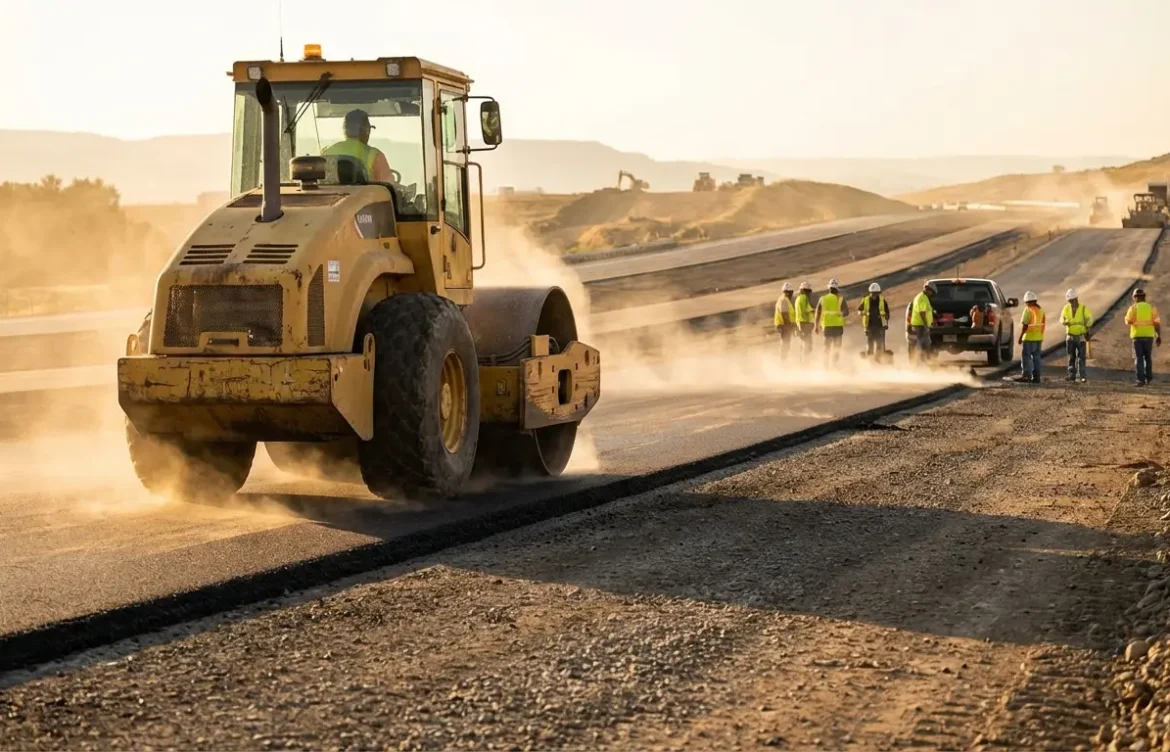
When people think about road construction, they often picture asphalt being poured, excavators digging into the ground, or large trucks moving materials from one place to another. But one machine that does some of the most important work often gets less attention than it deserves: the road roller.
A road roller may look simple from a distance. It moves slowly, makes repeated passes over a surface, and does not seem as dramatic as other heavy equipment. Yet this machine plays a critical role in making roads stronger, smoother, and more durable. Without proper rolling and compaction, even a well-designed road can develop cracks, uneven surfaces, or structural weaknesses much earlier than expected.
In many ways, the road roller is one of the final guardians of road quality.
What Is a Road Roller?
A road roller is a type of construction machine used to compact soil, gravel, concrete, or asphalt. Its main job is to press materials down tightly so the surface becomes stable and ready for long-term use.
Compaction is a key step in road building because loose material contains air gaps. If those gaps remain, the road can settle unevenly over time. Water may also enter weak areas, which can lead to erosion, potholes, and early damage. A road roller reduces those risks by applying consistent pressure across the surface.
That is why road rollers are used not only in highway construction, but also in parking lots, airport runways, industrial yards, and many other infrastructure projects.
Why Road Rollers Matter
The work of a road roller is easy to overlook because it happens after much of the visible groundwork has already been done. However, the machine is essential for the final quality of the project.
A properly compacted road offers several important benefits:
Better durability
Roads that are compacted correctly are more resistant to wear, weather, and repeated traffic loads.
Improved safety
Smooth and even surfaces help reduce driving risks, especially for vehicles traveling at high speed.
Longer service life
Good compaction helps roads stay in better condition for a longer time, reducing the need for early repairs.
Lower maintenance costs
When the base and surface are compacted well, contractors and governments may spend less on patching and rehabilitation later.
In simple terms, the road roller helps turn raw construction material into a usable transport surface that can stand up to time and pressure.
Different Types of Road Rollers
Not all road rollers are the same. Different projects require different machines depending on the surface material, site conditions, and desired finish.
Smooth Drum Rollers
These are among the most recognizable road rollers. They use one or two large steel drums to compact surfaces. Smooth drum rollers are commonly used on asphalt and granular soils.
They are often chosen when contractors want a flat, even finish on roads and paved areas.
Pneumatic Rollers
Instead of steel drums, pneumatic rollers use rows of rubber tires. These tires apply pressure more flexibly and can help seal surfaces effectively.
They are often used during asphalt work when a more uniform kneading action is needed.
Padfoot or Sheepsfoot Rollers
These rollers have a drum covered with raised lugs or pads. They are mainly used for compacting cohesive soils such as clay.
Because of their design, they are especially useful in foundation work and earthfill projects where deep compaction is needed.
Vibratory Rollers
Vibratory rollers use vibration along with weight to improve compaction. The vibration helps particles settle more tightly together, which is especially effective for granular materials like sand and gravel.
This type of roller is widely used in road construction because it can achieve high compaction performance efficiently.
How a Road Roller Works
The basic idea behind a road roller is straightforward: apply force to compress material. But in practice, effective rolling requires skill, planning, and attention to detail.
The operator must consider:
- the type of material being compacted
- the thickness of the layer
- moisture levels
- rolling speed
- number of passes
- machine weight and vibration settings
Too little compaction can leave the surface weak. Too much compaction, or rolling at the wrong time, can damage the material or reduce the quality of the finish. For example, asphalt must often be compacted within a certain temperature range to achieve the best result.
This is why experienced operators are so important. A road roller is powerful, but good results still depend heavily on how the machine is used.
Where Road Rollers Are Used
Although road rollers are best known for highway construction, their uses go far beyond public roads.
They are commonly found in:
- street paving projects
- bridge approach work
- airport runway construction
- warehouse and logistics yards
- housing developments
- embankments and foundations
- parking areas
- sports and recreation facilities
Any project that requires a firm and level surface may involve some form of rolling and compaction.
The Human Side of the Machine
There is something surprisingly steady and disciplined about the work a road roller does. It is not a machine of speed or spectacle. It is a machine of patience. It moves back and forth, pass after pass, gradually improving the surface beneath it.
That process reflects something important about construction itself. Big projects are not built only through dramatic actions. They are completed through careful repetition, measured pressure, and attention to small details that most people never notice once the road opens.
The road roller represents that quiet part of the job. It is not usually the center of attention, but it leaves its mark on every finished surface.
Looking Ahead
As construction technology continues to improve, road rollers are also becoming more advanced. Newer models may include better fuel efficiency, operator comfort systems, compaction monitoring tools, and smarter controls that help improve consistency on the job site.
Even so, the machine’s core purpose remains the same. It exists to create stronger ground, smoother pavement, and better roads for the people who use them every day.
In the end, the road roller may not be the most glamorous machine on a construction site, but it is certainly one of the most important. Every smooth road, stable surface, and long-lasting pavement section owes something to the slow, methodical work of this powerful machine.
Sergio Kip
April 21, 2026Recently I became interested in numismatics. I found a helpful resource at https://groshi.xyz.
I was looking for details about rare and collectible coins, and most sources were not detailed enough.
On this website I found clear descriptions about coins, their history, and their value. It helped me better understand what makes a coin collectible.
It’s worth visiting this website if you’re interested in coin collecting or want reliable information about numismatics.