 Trending
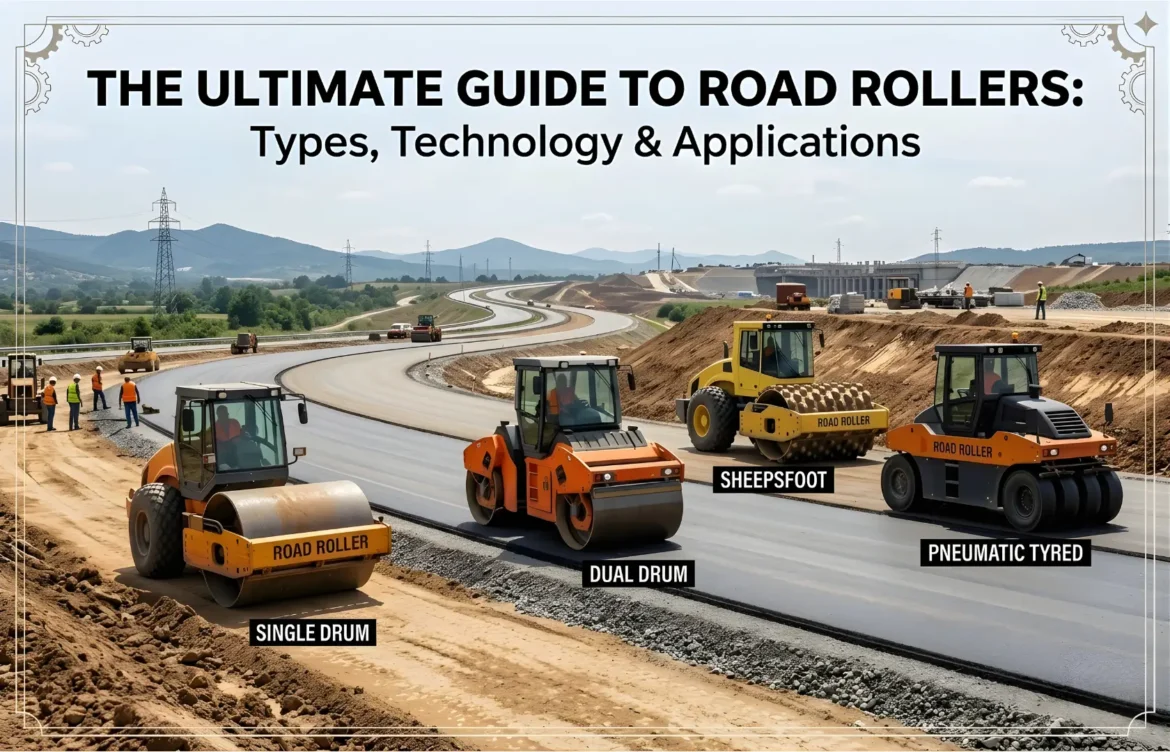
The Ultimate Guide to Road Rollers: Compaction Technology and Applications
Types of Road Rollers
Road rollers are the unsung heroes of infrastructure. While excavators and cranes get the cinematic shots, the humble road roller ensures that our highways, runways, and foundations don’t crumble under pressure. In the world of civil engineering, the goal isn’t just to move earth; it’s to increase the density of the material to support heavy loads.
If you are looking to understand the mechanics of soil and asphalt compaction, this comprehensive guide explores the different types of road rollers and their specific roles in construction.
What is a Road Roller?
At its core, a road roller (also known as a roller-compactor) is a heavy engineering vehicle used to compact soil, gravel, concrete, or asphalt. This process, known as compaction, works by expelling air from the voids between particles, increasing the load-bearing capacity of the surface.
Effective compaction prevents future settlement, reduces water seepage, and ensures the longevity of the structure. Depending on the project—whether it’s a massive highway or a small residential driveway—the type of roller required changes drastically.
The Physics of Compaction
Before diving into the types, it’s important to understand the three ways these machines work:
- Static Pressure: The sheer weight of the machine presses down on the surface.
- Impact: Using a dropping or striking motion to break up and settle deep layers.
- Vibration: Using high-frequency waves to “shaking” particles into a tighter arrangement.
1. Smooth Wheel Rollers (Static)
The most traditional form of roller, the smooth wheel variety, consists of one large steel drum in the front and two steel drums in the rear (or vice versa).
Characteristics:
- Weight Distribution: They rely purely on static weight.
- Surface: They leave a perfectly smooth finish.
- Best Use: These are ideal for finishing touches on asphalt or compacting well-graded sand and gravel. They are not suitable for deep layers of soil because they lack the “kneading” or “vibratory” action needed for thick lifts.
2. Vibratory Rollers
Vibratory rollers are the “modern standard” for most roadwork. They look similar to smooth wheel rollers but contain an internal eccentric shaft that rotates at high speeds.
Why Vibration Matters:
As the drum vibrates, it sends pressure waves into the ground. These waves temporarily reduce the internal friction between soil particles, allowing them to fall into the smallest possible spaces.
- Efficiency: They can compact significantly thicker layers (lifts) than static rollers.
- Versatility: Most vibratory rollers allow the operator to adjust the frequency and amplitude of the vibrations based on the material.
3. Sheepsfoot Rollers
The name sounds whimsical, but the function is industrial. A sheepsfoot roller features a drum covered in many “lugs” or “feet” that stick out from the surface.
The “Kneading” Effect:
Unlike smooth rollers that compact from the top down, sheepsfoot rollers compact from the bottom up. The lugs penetrate the soil and knead it together.
- Ideal Material: Heavy clays and silty soils.
- The Process: As the machine passes, the lugs sink deep. On subsequent passes, the soil becomes denser, and the “feet” begin to “walk out” of the layer until the drum is riding on the surface.
4. Padfoot (Tamping) Rollers
Padfoot rollers are the middle ground between smooth drums and sheepsfoot rollers. They have static pads (often tapered) that provide high-pressure compaction.
Key Advantages:
- High Speed: They can travel faster than traditional sheepsfoot rollers.
- Breakage: The pads help break up large clumps of cohesive soil.
- Surface Area: Because the pads are larger than sheepsfoot lugs, they offer better surface coverage while still providing deep penetration.
5. Pneumatic Tyred Rollers (Rubber-Tyred)
These rollers don’t use steel drums at all. Instead, they feature several rows of heavy-duty rubber tires, usually staggered to ensure full coverage across the width of the machine.
The “Kneading” Action:
Pneumatic rollers provide a unique kneading action that steel drums cannot replicate. This is particularly vital for sealingasphalt.
- Flexibility: The air pressure in the tires can be adjusted. Lower pressure provides a larger contact area for softer materials; higher pressure provides intense compaction for finishing.
- Uniformity: They are excellent for identifying “soft spots” in a subgrade before the final paving begins.
6. Grid Rollers
Grid rollers consist of a heavy cylindrical frame made of a network of steel bars, forming a grid-like pattern.
Specialized Use:
- Crushing: They are often used to crush large rocks or weathered rock into smaller pieces.
- Sub-base Work: They provide high contact pressure but very little kneading. They are most effective on well-graded gravels or rocky soils where the goal is to break down the aggregate size as you compact.
7. Cylindrical Rollers
These are the lightweight cousins of the industrial roller. Usually hand-pushed or towed by a small tractor, these are used for private projects.
- Applications: Residential lawns, golf courses, or small garden paths.
- Material: Usually made of iron or concrete.
What is Soil Compaction?
Before identifying the machines, we must understand the goal. Soil compaction is the process of applying mechanical stress to a soil mass to remove air voids, thereby increasing its density. Higher density leads to:
- Increased load-bearing capacity.
- Reduced water permeability (preventing frost heave).
- Minimized future settling and deformation.
Comparison of Roller Types by Soil Material
Choosing the right roller is a matter of matching the machine to the material. Using the wrong roller can lead to “over-compaction” (which crushes the material) or “under-compaction” (which leads to road failure).
| Material Type | Recommended Roller | Compaction Method |
| Cohesive (Clay/Silt) | Sheepsfoot / Padfoot | Kneading & Pressure |
| Granular (Sand/Gravel) | Vibratory / Smooth Drum | Vibration & Static |
| Asphalt (Surface) | Smooth Steel / Pneumatic | Static & Kneading |
| Large Rock/Stone | Grid Roller | Impact & Crushing |
| Sub-base Layers | Pneumatic Tyred | Kneading |
Export to Sheets
Key Factors in Selecting a Road Roller
When a project manager selects a roller, they look at four primary variables:
1. Soil Type
Is the soil “cohesive” (sticks together like clay) or “granular” (falls apart like sand)? Cohesive soils need the penetration of a sheepsfoot, while granular soils respond best to the “shaking” of a vibratory roller.
2. Layer Thickness (Lift)
If you are compacting a 30cm layer of soil, a static smooth roller won’t reach the bottom. You would need a heavy vibratory roller or a padfoot to ensure the entire “lift” is dense.
3. Moisture Content
Water acts as a lubricant during compaction. However, too much water (over-saturation) means you are trying to compact liquid, which is impossible. The roller must work when the soil is at its Optimum Moisture Content (OMC).
4. Project Scale
For a narrow sidewalk, a “walk-behind” vibratory roller is sufficient. For a four-lane highway, a dual-drum ride-on vibratory roller is required for efficiency and speed.
The Importance of the “Compaction Trial”
On major engineering projects, teams will often perform a “test strip.” They use a specific roller on a small section of soil and then test the density using a nuclear gauge or a sand-cone test. This determines exactly how many “passes” the roller needs to make to reach the required engineering specifications.
Summary of Maintenance Requirements
To keep these machines functioning for decades, a rigorous maintenance schedule is required. Steel drums must be checked for “pitting” or flat spots, which can ruin the finish of a smooth asphalt road. For sheepsfoot rollers, the “feet” must be inspected for wear; if they become too rounded, they lose their ability to penetrate cohesive soils effectively. On pneumatic rollers, maintaining equal tire pressure across all wheels is non-negotiable—if one tire is softer than the others, the compaction across the road surface will be uneven, leading to future potholes.
By mastering the selection of the machine, the physics of the soil, and the latest in digital monitoring, engineers can build infrastructure that lasts for generations rather than years.
Conclusion
Road rollers are far more than just “heavy weights on wheels.” They are precision instruments designed to manipulate the very physics of the earth beneath us. From the deep kneading of the Sheepsfoot roller on clay to the high-frequency vibrations of a Smooth Drum on sand, each machine plays a specific role in creating the foundations of our modern world.
Understanding these differences is the first step toward better construction, safer roads, and longer-lasting infrastructure.
https://naturopathic.doctor
May 5, 2026Great content, thank you for sharing!
https://naturopathic.doctor